


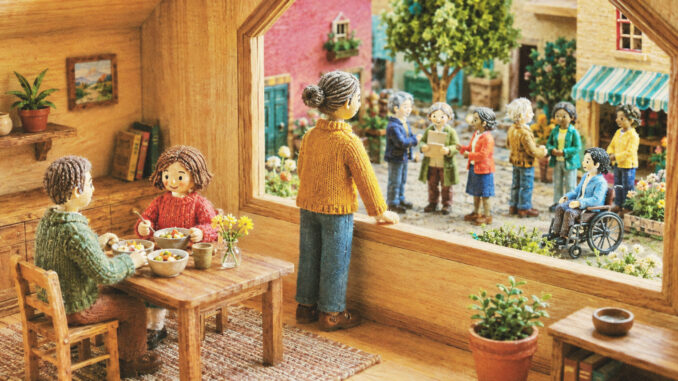

A full life takes shared effort, from the public square to the dinner table.
As another big election season bears down on us, a lot of decent people are already battening down emotionally. We’re turning off the alerts, avoiding the arguments and keeping politics out of polite conversation.
With so much negativity in the world, it only makes sense to keep your head down as an act of self-preservation. Indeed, many of us can treat politics like weather because we have good cover. But what feels like self-care under a sturdy roof can look a lot like abandonment to the people left out in the rain.
Communities are already absorbing cuts to assistance programs, public schools and transportation, even medical care and FEMA relief. With more on the way, a lot of us can’t afford to wait out this storm. We’re looking toward the midterms as a chance to restore some of what has been stripped away—and reassert that public life should protect human lives, not just private wealth.
All Bets Are Off
Was a time not that long ago when, for many Americans, politics mostly meant aligning with certain policies and ideologies. Democrat, Republican, Libertarian, Green— your party was how you voted, not a lifestyle choice or a full personality.
No matter who won, we generally assumed our cities, states and country would continue functioning more or less as advertised. Legislators would legislate, courts would rule, and government would regulate according to accepted rights, freedoms and protocols.
These are not those times.
If this summer has taught us anything, it’s that our leaders care more about gold-plating statues than they do about feeding mothers and children. They are more motivated to build a ballroom fortress than to protect school kids from guns, our national parks from corporate interests, or our streets from racial and sexual violence.
This summer has shown us that oil profits soar when there’s war in the Middle East, to the benefit of our leaders in every branch of government. We’ve learned that such a war means higher gas prices and rising costs everywhere else too: groceries, goods, energy bills and services that must charge more to cover their own increased expenses.
We’ve learned that our DOJ will try to ruin a former Olympian’s life for one act of suspected vandalism while bending over backwards to protect a cadre of serial pedophiles. At this point, “both sides are bad” is less an independent political position than a green light for awful humans do their worst.
What, Me Worry?
The people being harmed don’t have the luxury of disengaging. The family being deported can’t opt out. Women losing healthcare access can’t opt out. Queer people being targeted can’t opt out. Black voices being silenced can’t opt out.
For many financially secure white voters, though, the danger can still feel distant enough to tune out. That’s what privilege often looks like in real life — not a yacht or a monocle, just enough insulation to believe the consequences will land somewhere else. No need to make a fuss. Everything works out eventually, so long as you don’t cause trouble.
There’s a name for the idea that nobody owes anybody anything: toxic individualism. Every hardship is a personal failure; every request for help is somebody trying to take what you earned. It’s the dark side of the American Dream, ingrained in us through phrases like “Pull yourself up by your own bootstraps” – a physical impossibility, mind you.
No matter how much we enjoy stories about “self-made” billionaires, there’s no such thing. None of us built a life alone. We depend on teachers, coworkers, tradespeople, caregivers, utility workers, farmers, family, friends, and strangers following thousands of little rules for the sake of us all.
Part of the Deal
Society comes with obligations. Living together means paying attention, stepping up, and refusing to leave our neighbors standing alone when their rights are challenged.
When we see people being harassed, intimidated or otherwise antagonized, that’s our cue to say something. In public, online, at work, in neighborhood meetings and around the dinner table, silence amounts to agreement. You may feel like you’re refusing to dignify the bully with a response, but to everyone else in the room, it looks a lot like permission.
If some jerk wants to disrespect someone’s race, faith, gender, sexuality—or simply who they are—they’re counting on people looking away or trying to defuse the situation:
“Don’t engage them. That only gives them what they want.”
“They’ll go away if you stop encouraging them.”
“Just ignore them. Don’t make a scene.”
Before telling anybody to calm down, consider how chill you’d be if you were the one being attacked—and how it would feel to be surrounded by people pretending nothing was happening.
Huddle Up
Remaining neutral only feels like a safe option. In practice, it leaves open space for bad actors to lie, manipulate and turn us against one another. Shared struggle binds us. It builds trust and gratitude, makes us harder to divide, frighten and control. Healthy communities rely on people knowing and protecting each other. Caring for each other’s well-being.
As this election approaches, nobody has to consume every outrage or argue with every fool on the internet. But we do need to pay attention, vote and speak out when neighbors are targeted. Protect the house we’ve built together, and we can weather any storm.
COMMUNITY REPS
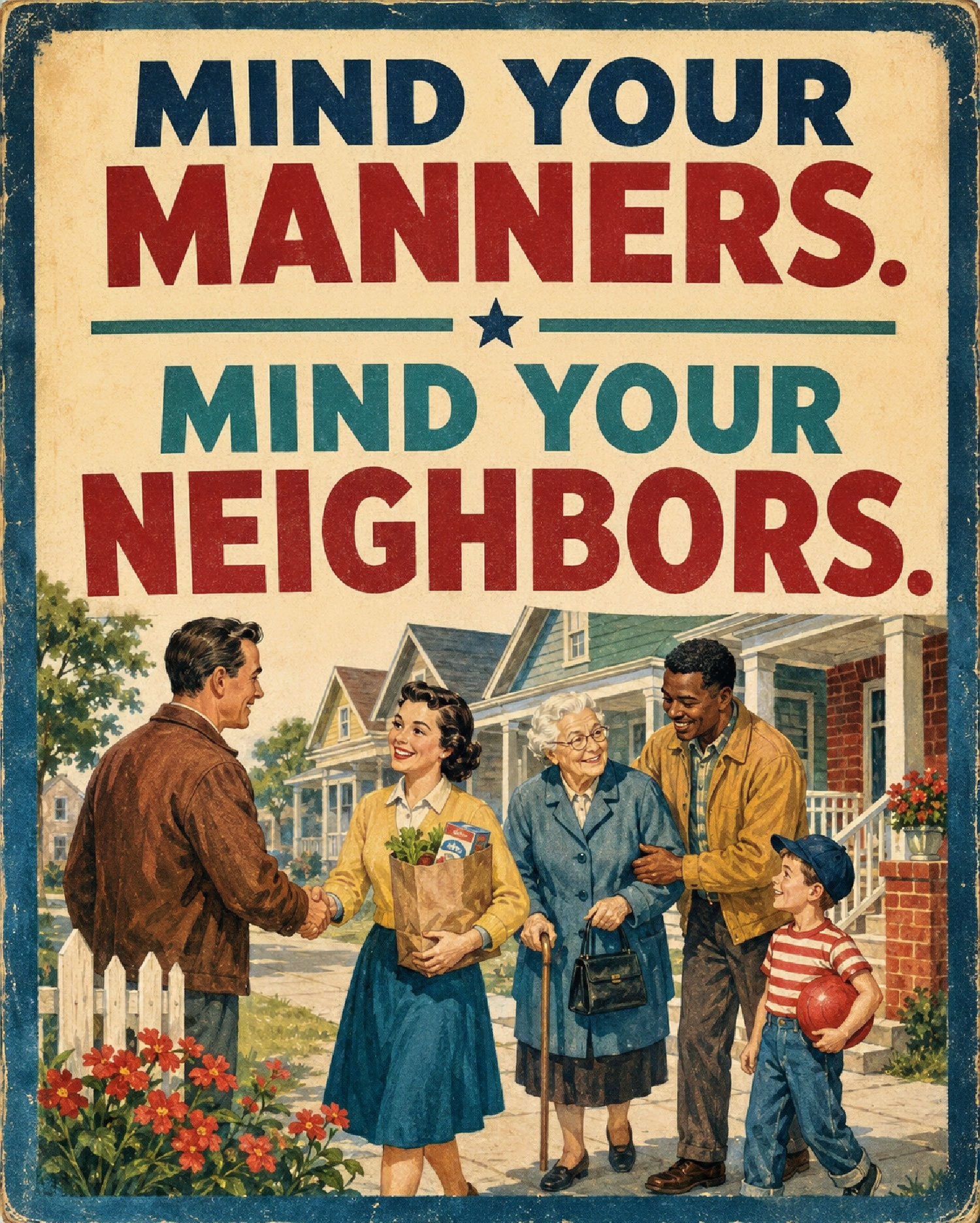
Five low-stakes ways to strengthen our social muscles.
After years of screens, social distancing and me-first messaging, a lot of us are simply out of practice. Here are five tiny ways to help turn strangers into neighbors we actually know and care about.
-
Make the Introductions
Say hello and tell people who you are. If you’re with someone, bring them into the exchange too. Nobody enjoys hovering beside a conversation like an unclaimed suitcase. A quick introduction signals that everyone belongs and gives people somewhere to begin.
-
Make Room
On the sidewalk, in traffic, at the grocery store, in conversation: notice when somebody needs to get through. Moving aside briefly is not a constitutional crisis. You can reclaim your exact three feet of pavement when they pass.
-
Say the Nice Thing
A real compliment costs nothing and can change somebody’s whole day. Tell people when they look great, make a smart point or are simply fun to be around. Don’t manufacture it. Just stop keeping the good stuff classified.
-
Return the Favor
When somebody makes an effort for you, remember it. Look for a chance to return the consideration. No scorecard required. This kind of give-and-take is how relationships take root.
-
Back People Up
When somebody is dismissed, embarrassed or targeted, don’t leave them hanging while everyone studies the tablecloth. You don’t need a speech. Call out the comment, interrupt the pile-on, or whatever it takes to make clear that the insult did not speak for the room. Pro Move: follow-up privately afterward with the person singled out, and make sure they’re OK.
What do you think? Click the links for more info, and please leave your questions and comments below. Or email editors@nwlocalpaper.com — we love to hear from readers!
Be the first to comment