



How being outside brings us back to ourselves.
It’s already been a long, hot summer, and it isn’t even halfway over. The war in Iran still rages. The ghosts of senators, both living and dead, haunt our fragile democracy in the wake of the country’s 250th anniversary, which had half the country celebrating while the other half questioned whether that democracy could be sustained. The city was both elated and compromised while hosting World Cup teams and fans.
Storms struck Broad Street, flooded neighborhoods and uprooted trees. Heat waves parked over the mid-Atlantic, cooking the patience of even the most heat-tolerant. Traffic to the shore swelled even as rental prices soared and high tides swallowed whole stretches of South Jersey’s beaches.
If, like me, you’ve had it with this summer of our discontent, there is a temporary solution (in more ways than one): Get back to nature.
Not just the Wissahickon, Bartram’s Gardens, or John Heinz Wildlife Refuge, although these are great escapes and, for many, the only option. I mean nature beyond the sounds of Lincoln Drive, I-76 and I-95.
Out of Office
From where I’m sitting in the middle of the Pennsylvania Wilds, there is no cell signal. I’m five hours from the city on a Tuesday afternoon, and most of the campsites are empty. Despite the heat (85 degrees), the scarlet tanagers and grosbeaks still sing in the towering branches of hemlock, maple, and oak trees.
The dogs are already asleep after a long walk in this forest, across rushing streams and past mountain vistas. I’ve been at this secluded campground for less than 24 hours, and already my brain and body feel anew — like the snakes that leave their shed skin, as thin as tissue paper, beside rotting logs brought back to life by moss and mushrooms.
Science supports what feels plainly true out here: Being in nature is an act of wellness. Even just a few days lowers stress, clears the mind and restores something modern life steadily wears down. But for all science can measure about what nature does to the human mind and body, it still hasn’t satisfactorily answered the question: Why?
I’m not a scientist, although for a brief time I was a biology major whose only goal was to spend my life counting turtles and birds in the woods. Based on a sample study of one, though, I’ll attempt to get at the why: Perhaps the answer is the question itself.
In nature, we (or at least most of us) don’t need to know how the mountains formed, how the trees communicate or how the loggerhead shrike evolved to spear the corpses of its prey on thorns throughout its territory.
All I know is that the terror and the beauty are both wondrous, often leaving me speechless. Breathing in decay and life and exhaling gratitude for the luxury and privilege of sitting here, experiencing the millions of years that have led to this unique moment in this particular part of the world.
In the Grand Scheme
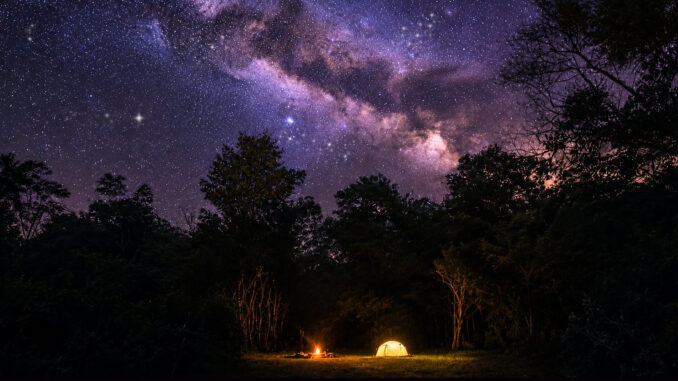
When the sun goes down here, all is quiet. At one of the few “dark-sky” spots left in the East, the birds, fellow campers, raccoons and porcupines wait with bated breath for the stars to appear.
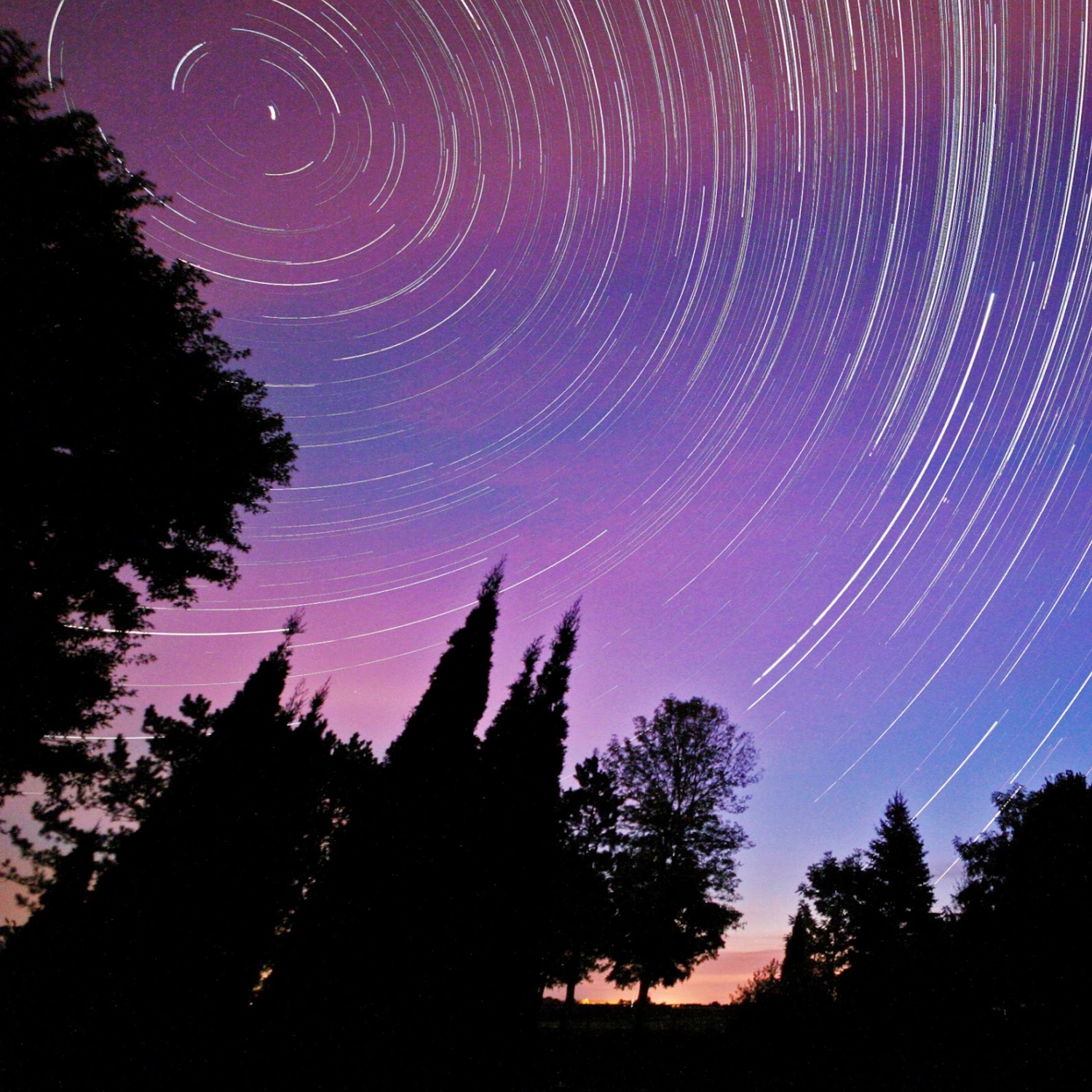
At first just a few dots of light emerge through the darkening sky. Slowly, they’re joined by countless more from across the universe, until the sky is full of light breaking through the darkness.
On our last night there, smoke from the Canadian wildfires made it harder to breathe and almost impossible to see the stars. It was a grim reminder that even here, you can’t escape the catastrophic effects of climate change or the forces that keep driving it. And yet, those three days in the woods were enough to wipe the lenses of familiarity clean and let me see the world differently.
Being in nature slows time. The stars and trees remind us how small and temporary our existence is on this spinning rock. Nature offers to heal things we didn’t know were broken. It gives us a chance to escape the onslaught of bad news and conflict on our screens.
It leaves us less concerned with why it works than with another question: Why do we seem so hell-bent on destroying it? Humanity is part of the natural world, which provides for all our needs. The only thing it asks in return is that we ensure its existence, so future generations can still experience all its glory.
Three is a Magic Number
A little wilderness can work wonders.
Every vacation day counts when you’re juggling gigs. It’s easy to put time off until the economy’s better, the workload eases up or you somehow have more time.
Full stop: You don’t need two full weeks—or even one—to rest, recharge and revitalize. According to science, three days in nature can provide a free and surprisingly powerful reset.
Cognitive psychologist David Strayer calls it the “three-day effect.” After three days away from screens and immersed in nature, the mental static begins to clear. In one study, hikers several days into an electronics-free wilderness trip performed about 50 percent better on a creative problem-solving test than hikers who hadn’t left yet.
Science journalist Florence Williams gathers that finding into a much wider—and wonderfully strange—body of evidence in her essay “Call to the Wild: This Is Your Brain on Nature.” She takes readers from healing forests in South Korea to studies showing that even a walk in the woods can lower cortisol levels and ease stress.
And apparently, nature doesn’t even have to be real. In prisons, digital scenes of forests, mountains, oceans and streams have helped reduce stress among incarcerated people in much the same way the real thing calms the rest of us.
Science can measure the benefits. The more interesting question may be how can we better tap into these positive effects?
Three More Takeaways:
-
- Pennsylvania Wilds: Not one park but a sprawling 13-county region across north-central and northwestern Pennsylvania, covering about a quarter of the state. Its two million acres of public land include forests, rivers, elk country, the PA Grand Canyon—and plenty of places where your phone may finally stop finding you.
- Dark sky: Astronomer-speak for a place far enough from city glow that nighttime actually looks dark. With little artificial light washing out the view, the Milky Way and other celestial wonders suddenly show themselves. The PA Wilds contains some of the darkest skies in the country, including renowned stargazing destination Cherry Springs State Park.
- Loggerhead shrike: A handsome little songbird with the habits of a horror-movie villain. Because it lacks a hawk’s powerful talons, it impales prey on thorns or barbed wire to hold it still—or save it for later. Basically, it’s a feathered Vlad the Impaler wearing a tiny black mask. Native throughout North America (a winter visitor to PA).
What do you think? Click the links in this post for more information, and please leave your comments and questions below. Find Nate online at natehouse.wordpress.com, where he shares short stories, news, essays, and creative non-fiction. Pro Tip: seek out his award-winning novel “Float” (2011) at local libraries.
Be the first to comment