


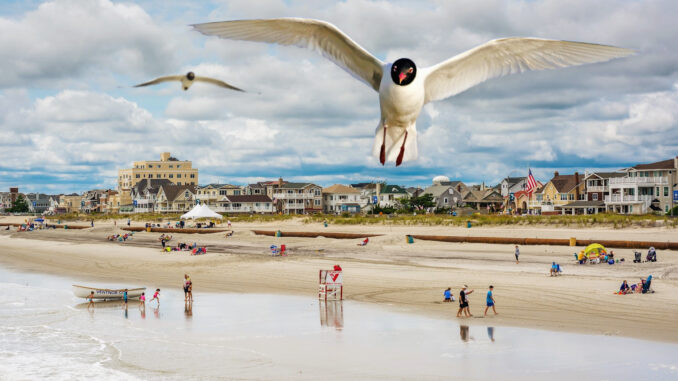

Bet you didn’t know all this about Jersey wildlife.
Grab your towel! In the spirit of the season, our Local wildlife feature is headed to the shore. From Cape May Point to Long Beach Island, this stretch of South Jersey coastline is part of Philly’s DNA. Every summer weekend, waves of city dwellers endure soul-crushing traffic for the promise of a few days at the beach.
It’s a whole different world by the sea, let’s get to know it a little better together.
FERTILE BARRENS
Start with the ride down. Before you reach the ocean, you pass through one of New Jersey’s strangest and most important landscapes: the Pine Barrens. Most people know these scrubby forests along backwoods highways from The Sopranos, or Jersey Devil stories. There’s so much more here.
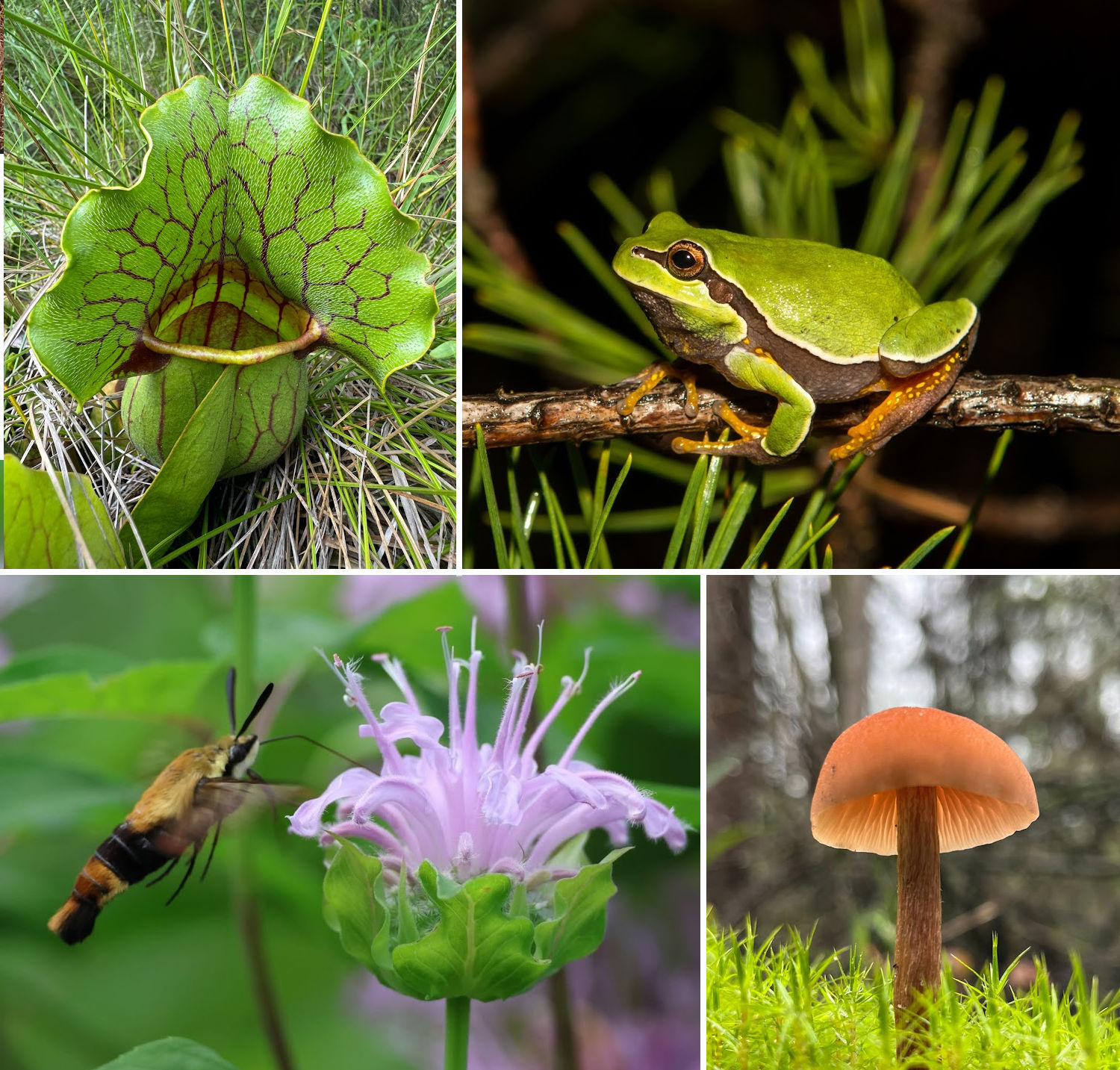
Despite its name, the Pine Barrens teems with a unique ecosystem shaped by flame and wetlands. Life here has evolved to survive in high-acid, low-nutrient conditions. Specialized “pygmy” pine trees and scrub oaks thrive in the sandy soil, sheltering rare orchids and carnivorous plants. Tea-colored streams and rivers here are stained by iron and natural tannins in the groundwater.
This extraordinary environment is a global hotspot for remarkable reptiles and amphibians, migratory birds, and woodland mammals. The Pine Barrens tree frog is a local icon: vibrant green with a striking white stripe, brown markings, and orange feet. Its call goes “quonk-quonk-quonk” on hot, humid nights from April to September.
Wildfire plays a role here, too. Trees like pitch pine are stimulated to send out new shoots when their wood is charred. Their pine cones burst open with extreme heat, releasing seeds into the fertile ash after a big burn.
COAST WITH THE MOST
Boardwalks are kind of natural adaptation, as well. New Jersey’s beaches were so sprawling, tourists tracked incredible amounts of sand into hotel lobbies and passenger trains. In 1870, a railroad conductor in Atlantic City created the first wooden walkway, which was a big hit. Soon, someone got the idea to raise them to catch ocean breezes and, boom! An iconic American tradition was born.

Another legendary local symbol is the famous “Jersey tomato” — not a special variety so much as a whole tomato culture: fertile farms, sandy well-drained soil, a long growing season, and varieties chosen for flavor, not shelf life. The most famous was the Rutgers tomato, introduced in the 1930s after work between Rutgers University and Campbell Soup, which was headquartered in Camden and very much cared how its tomato soup tasted.
Campbells were real leaders in tomato research. They had breeding programs and test fields, and Rutgers helped develop varieties remembered for that full, sweet-tart tomato flavor: juicy but not watery, firm but not crunchy, smooth but not mealy.
The catch is that flavor does not always travel well, which is why the best ones still feel seasonal and local: buy them close, eat them fast, and spend February avoiding whatever the supermarket is calling a tomato. A proper Jersey tomato does not need much. Salt. Bread. Mayonnaise, if you were raised right. Maybe a sink nearby. Pure summertime bliss.
“RATS WITH WINGS”
Seagull is a generic term – in New Jersey, it could apply to up to 15 different species of coastal birds but the big noisy brutes divebombing your outdoor dining experience are most likely herring gulls (white heads/pink feet) and laughing gulls (dark heads + feet). They can both be aggressive, although the larger herring gulls tend to be the worst offenders. While the two species frequently intermingle, herring gulls regularly steal food from laughing gulls, and will also eat their eggs and chicks.
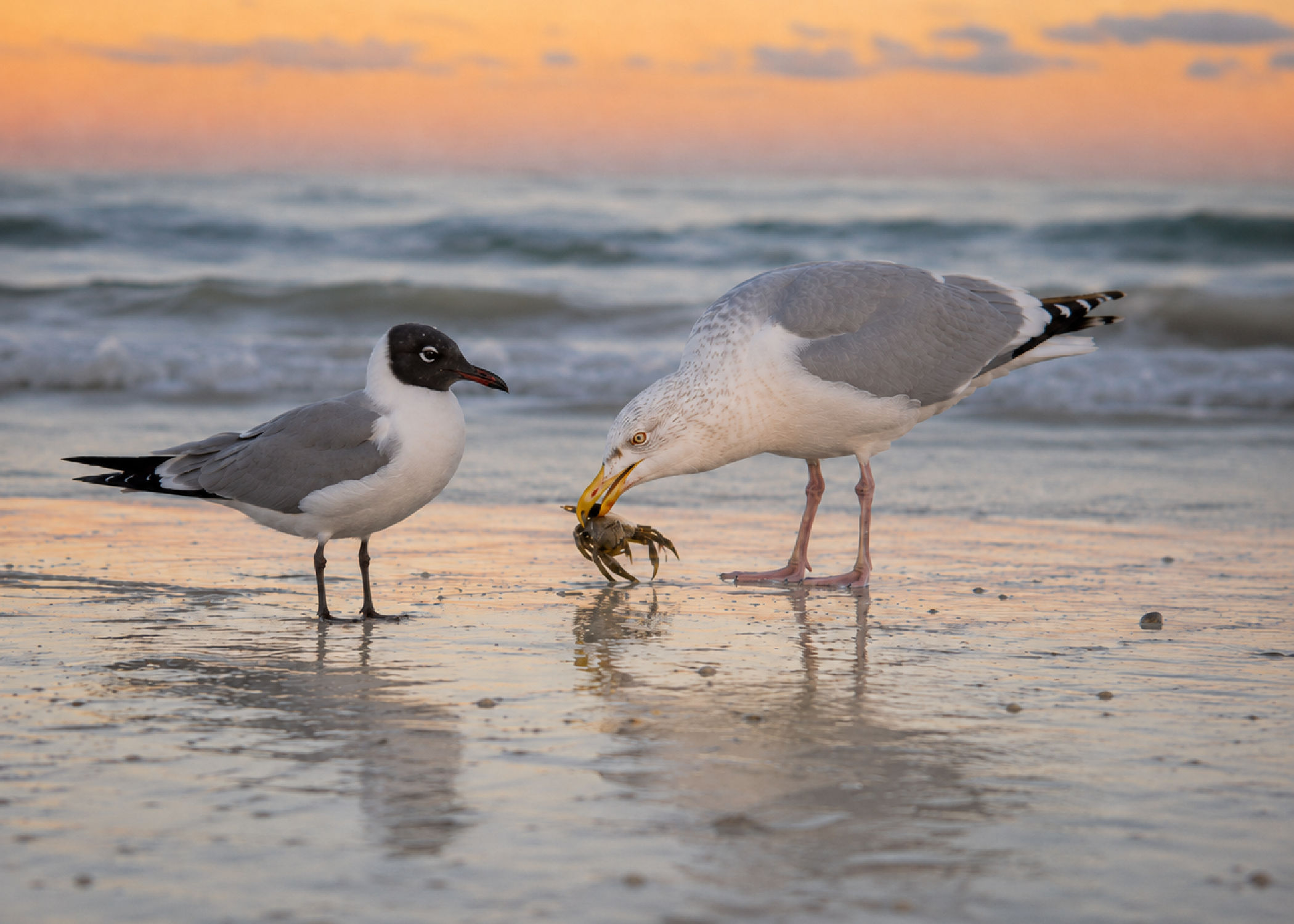
Gulls are more than boardwalk bullies, though. They’re essential scavengers and predators that clean up sea scraps and help regulate small marine and insect populations. When the tourists go home, the herring gulls will stick around through the winter, but our laughing gulls typically migrate south to Florida and the Caribbean.
MAKING A SPLASH
Jersey’s ocean changes colors like a mood ring. From deep blue-green to cool olive-gray, and even brilliant turquoise, it shifts with temperature, weather conditions, and plankton blooms. Whatever the hue, this water is dense with nutrients and microscopic marine life. You can’t see the bottom. You never really know what you’re swimming with.
The surf has opinions, too. Waves rear up quickly and break hard at the shoreline. Currents tug you down the beach. Sandbars shift. The ocean is always moving, and it does not care where you left your blanket.
Yeah but the bodysurfing! The long, shallow slope at many popular South Jersey beaches creates the perfect, wedge-shaped “pitching” waves that make for long, thrilling rides. No board required.
PLEASE BE DRIFTWOOD
One of the most unnerving experiences at the Jersey shore is also the most universal: stepping on something underwater and having no idea it was. Is it alive? Does it have teeth or pinchers or suctions or stingers? Has it attracted any hungry predators who might be swimming near?
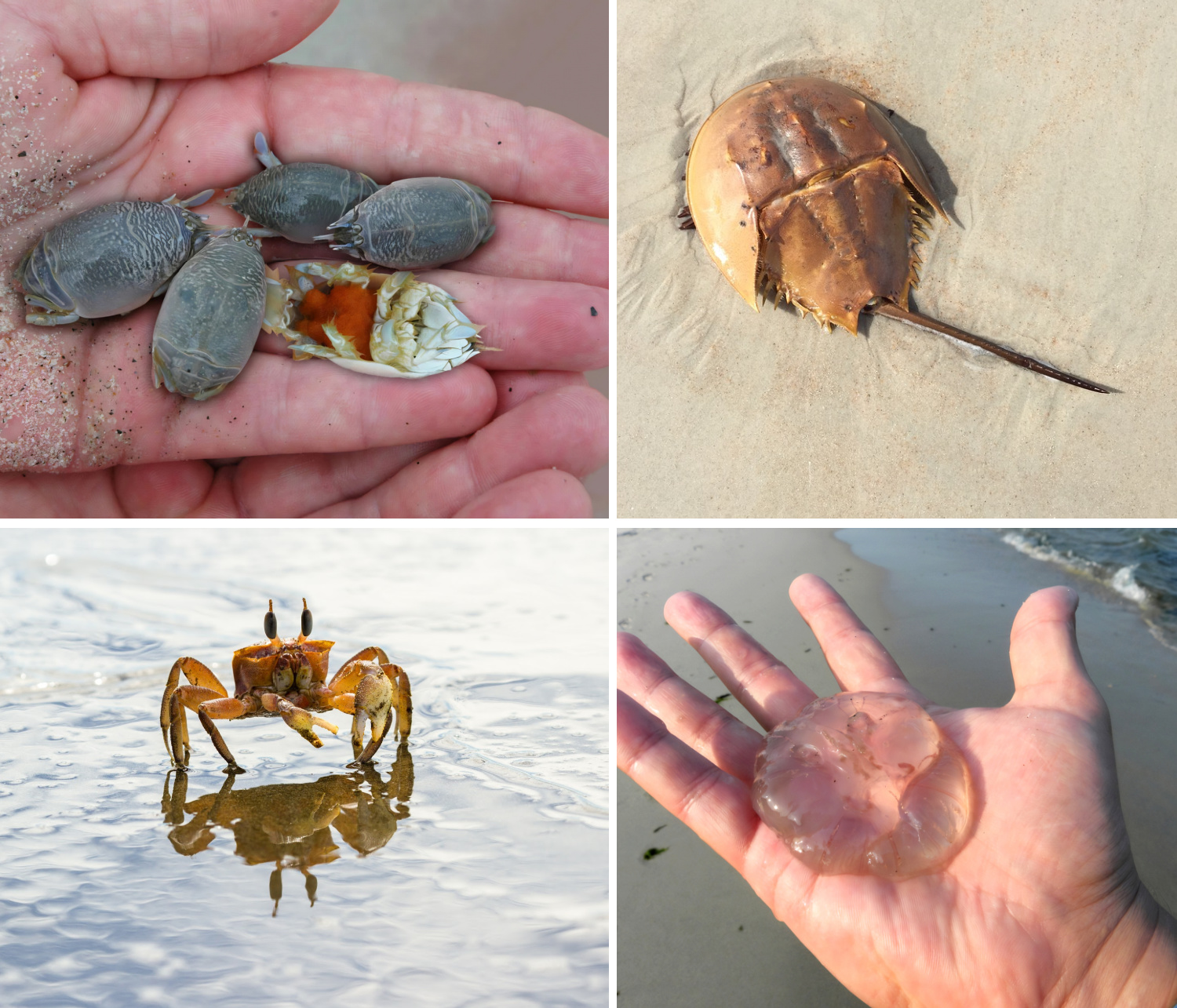
From panic to disinterest, it’s not always easy to know what reaction is appropriate. Until now! Here’s a handy guide to the likely creatures hiding underfoot at the Jersey shore.
- MOLE CRAB: These small, oval creatures live in the swash zone, where waves rush up and pull back. They burrow backward into the sand and filter food from the water. Feels like a quick skitter across your skin. Also called “sand flea.” Harmless.
- HORSEHOE CRAB: Not a crustacean but more like a giant prehistoric daddy longlegs with its legs folded under. Stepping on one feels like walking on a scratchy, slippery helmet that slides out from under you. Aside from tripping hazards, they are completely harmless to humans. Their hard, pointy tail only looks like a stinger — it’s actually used for steering and flipping themselves over (and is sadly rather useless).
- JELLYFISH: These guys. No brain, no heart, no blood, and somehow still capable of ruining an afternoon. The good news is, the jellyfish you’re most likely to encounter at the Shore is the moon jelly: a clear, saucer-like blob whose sting is so mild most people barely feel it. The more problematic suspects are sea nettles and lion’s mane jellyfish, which can look similar from a panicked distance: round bells, reddish-brown or whitish color, and trailing tentacles you do not want anywhere near your skin.
Of the two, sea nettles are more common, with a painful but usually manageable sting. Lion’s mane jellyfish pack a much bigger wallop but fortunately they hardly ever come close to shore. Surfers describe being stung as a searing, almost fizzy burn that can last for hours, possibly causing cramps and nausea. ⚠️Don’t touch mystery gelatin! Even on the sand, as dead jellyfish can still sting.
📢🪼🔥 On June 17th, local authorities announced an invasive jellyfish warning in effect for the Jersey shore this summer: a species of tiny, highly-venomous“clinging jellyfish” (originally from the Pacific ocean) has been spotted in alarming numbers. Exercise caution when water temps climb over 75 degrees, especially in shallow estuaries and back bays.
- SKATES AND RAYS: While these “cartilaginous” fish live very different lives, they are basically impossible to tell apart for casual observers. Both are extremely common in South Jersey waters, sometimes whole schools of these gentle bottom-dwellers will swim close to shore.
The ones to worry about, though, are the loners hiding in the sand. They’ll feel like squishy doormats underfoot, followed by a jerking or flapping sensation. Watch those tails! A stingray’s can cause real pain. Shuffle your feet when you walk, and they’ll keep their distance.
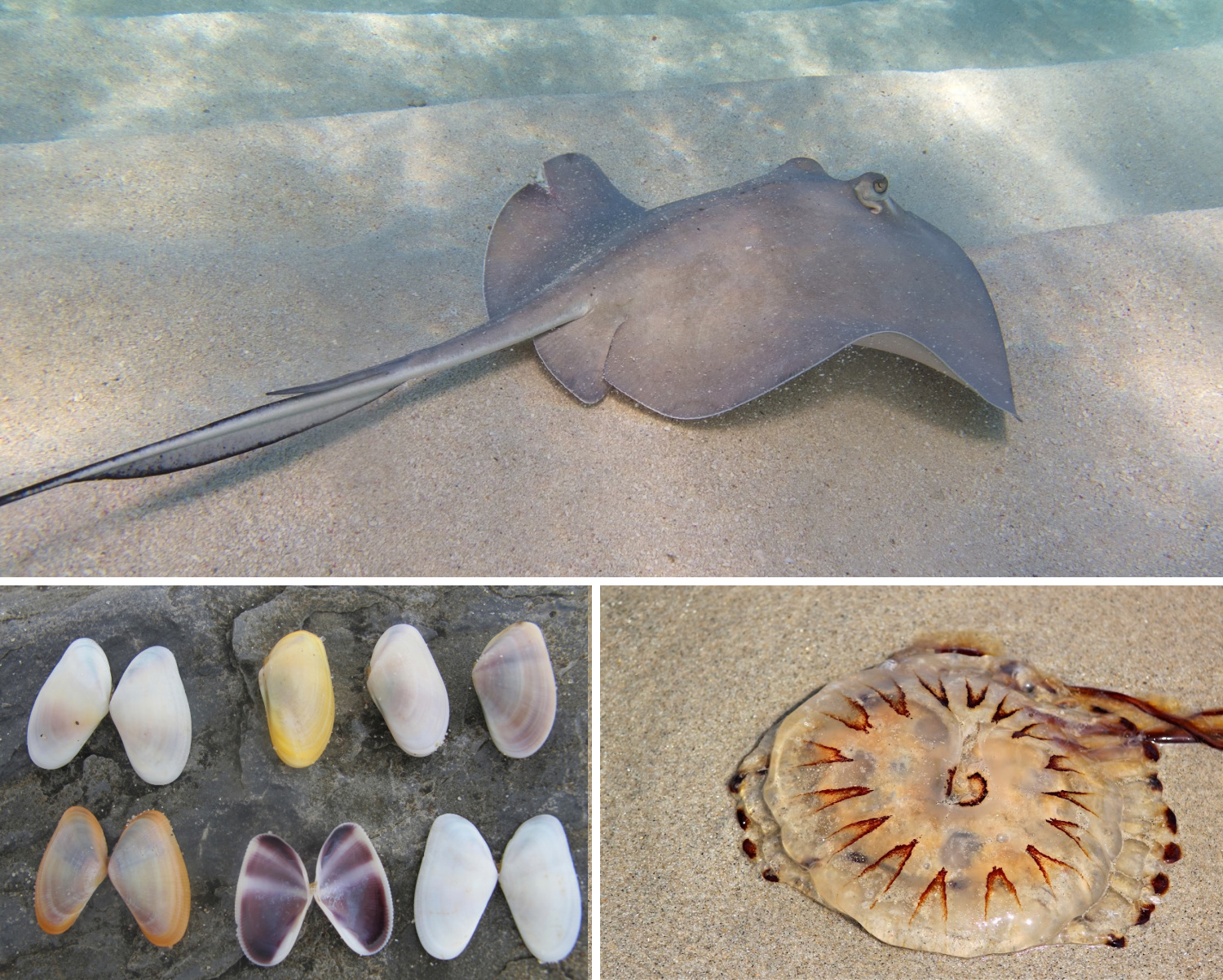
- COQUINAS: Tiny “bean clams” give a faint, vibrating tickle beneath your feet, as the clams rapidly burrow back into sediment as waves retreat. Like little wiggly pebbles. Threat level zero.
- SHELL FRAGMENT: Sometimes the thing that touched you was not ancient wildlife or a hidden crab. Sometimes it was a broken clam shell with poor boundaries. As always, water shoes are a personal choice.
- SEAWEED: Cold, slippery, dramatic. Was that an eel? A fish swimming by? A shark circling? Spoiler alert: it’s probably seaweed. Fish have excellent senses and the mobility to expertly avoid human encounters. Not to say seaweed is lifeless. A variety of tiny snails, slugs, worms, crabs, and shrimpy things could be along for the ride. They’re harmless, but it’s probably best not to think too much about them.
- GHOST CRAB: Pale, quick, and nocturnal. They emerge from their burrows in the evening, scurrying sideways across the sand at speeds up to 10 mph. They don’t swim, so you’re safe from them in the water. But if they catch you sleeping on the beach at night, they may crawl up to pinch off flakes of dead skin from your hands and feet to feed on. Don’t freak out, they’re providing a service. Nature’s free mani/pedi! 🤢😱
SALTY SURPRISES
We go to the Shore for the fun and sun, but just beyond the beach chair, there’s a wild alien world worth exploring. Unfortunately, sometimes nature has it out for you. If you’ve ever run for your life across a bayside beach while something invisible and furious bites at your limbs, congratulations. You have met the greenhead.
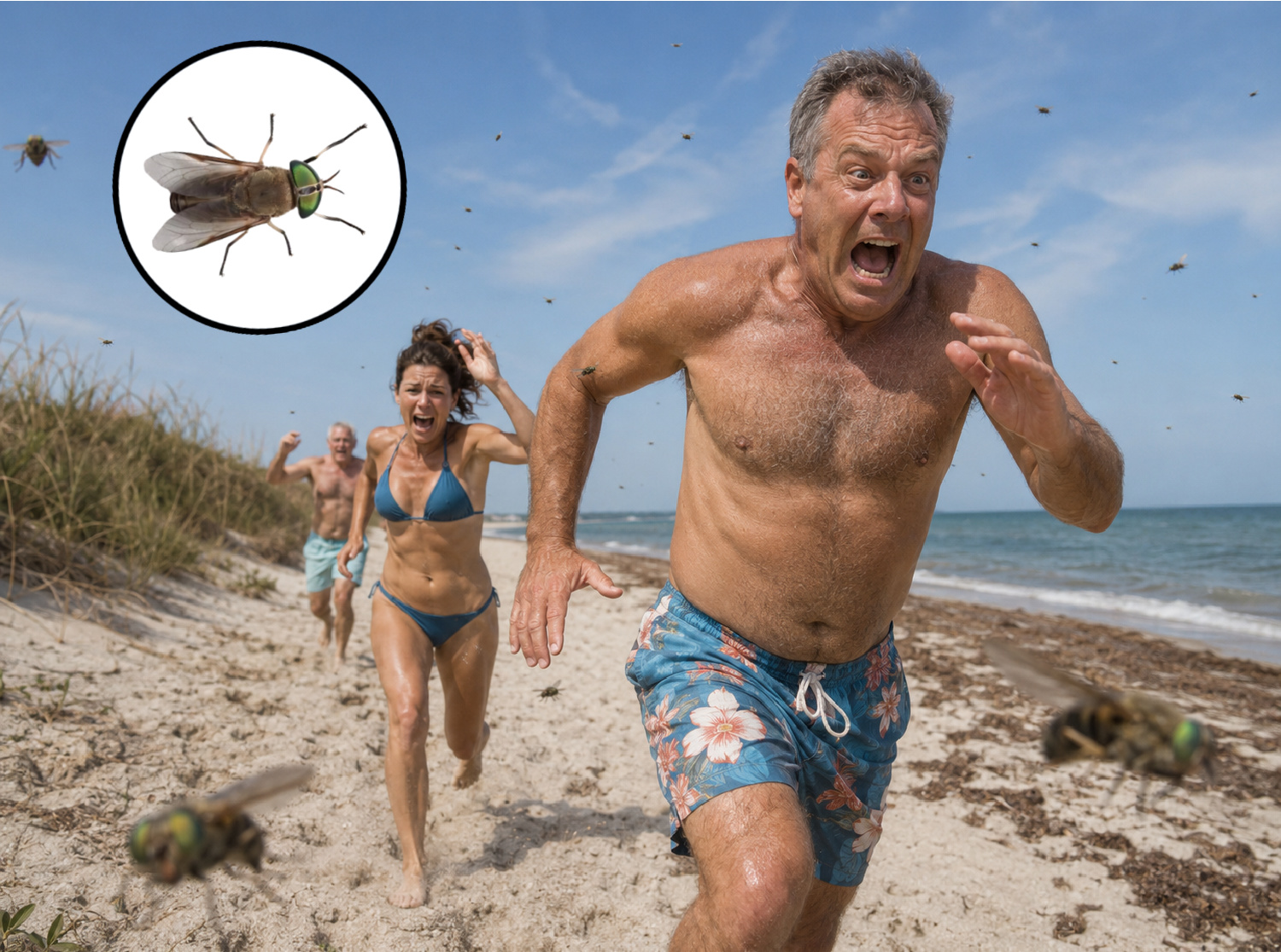
Greenheads are salt-marsh horseflies, and the females bite because they need blood to make eggs. They don’t suck it from us, mosquito-style. No, their mouthparts slice the skin like scissors so they can feed, which is why the bite feels less like a sting and more like a tiny hate crime. Their saliva is also super irritating, often causing itching, burning, and swelling that lingers for days.
They breed in coastal marshes, which is why bays, lagoons, inlets, and those “secret” little coves can turn into Greenhead Haven in summer. Peak season is usually July, and midday can be especially brutal. They’re not known for spreading disease, but they bite during daylight, attack persistently, and don’t always care about regular bug spray. Some people swear by specialized repellents, neutral clothing, staying dry, avoiding perfumes, and praying for the right breeze. Results may vary, because greenheads are professionals.
Are they part of the ecosystem? Sure. Are they pollinators? Technically. Are we grateful for their service? The record will show that we are still thinking it over.
GONE, GULL
True Story: one summer in 1983, the author saw a herring gull steal an entire slice of Sicilian pizza from a small child in one daring swoop. He was immediately chased down by every gull in New Jersey. The feeding frenzy that followed was so loud and violent and greasy that today the mere thought of a square slice of pizza induces crippling flashbacks.
That same Ocean City boardwalk is now practically seagull-free, thanks to a squad of trained raptors hired to scare these shameless scavengers back to the bays and inlets where they belong. Every day from 8am to 9:30pm, professional handlers release birds of prey to the skies above the beach, boardwalk, and business districts. Just the sight of them sends the gulls packing.
Since 2019, it’s worked like a charm. The gulls are not harmed or harassed. They’re not even especially spooked. They instinctively recognize a natural predator and take the fitting action. And it’s for their own good!
Gulls should be eating clams and crabs, not curly fries. The easy, empty calories they can’t resist from humans can have real consequences: feather deformities, fertility problems, and behavioral issues that could be deadly.
More importantly, gulls on the boards will attack people and steal their food — a real problem when a big part of your economy is outdoor dining. Falconry is an elegant, eccentric solution that’s both humane and badass.
LEARN MORE! Click the links in this post for more info. Thoughts? Comments? Please leave them below. If you enjoyed this Local wildlife feature, check out last month’s spotlight on Philly’s lively goat scene.
Be the first to comment