


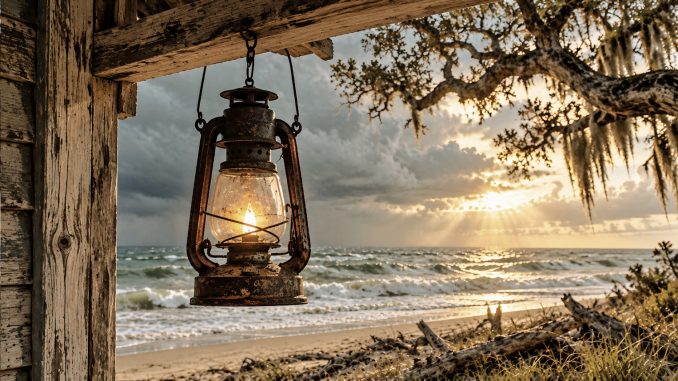

In a local author’s new novel, progress threatens a coastal sanctuary, awakening its restless past.
Get the popcorn. Nate House’s House of Refuge is a book that reads like a movie.
It’s 1696, and “John is dead,” our narrator Mary tells us. John was her husband. She’s writing the story of her life in his journal—now hers—leaving room for future generations of women to add their own, “so we can write to those yet to be born and they can read the words of the dead.”
And Mary has quite a story. Shipwrecked on the Florida coast with her baby, she survives the violent confrontation her husband helped provoke with the Ais people. But getting out alive is only the beginning. Among the people John despised as savages, she finds love, a new family, and a very different future.
Two centuries later, another unhappy wife arrives on this coast. Sallie’s husband has been hired to run a house of refuge, a shelter for shipwreck survivors, but he’s often drunk or absent. Grieving the loss of their newborn, she finds an unexpected ally in a mysterious man named Samuel. Together, they make the place a haven for people whose troubles extend well beyond a wreck at sea.
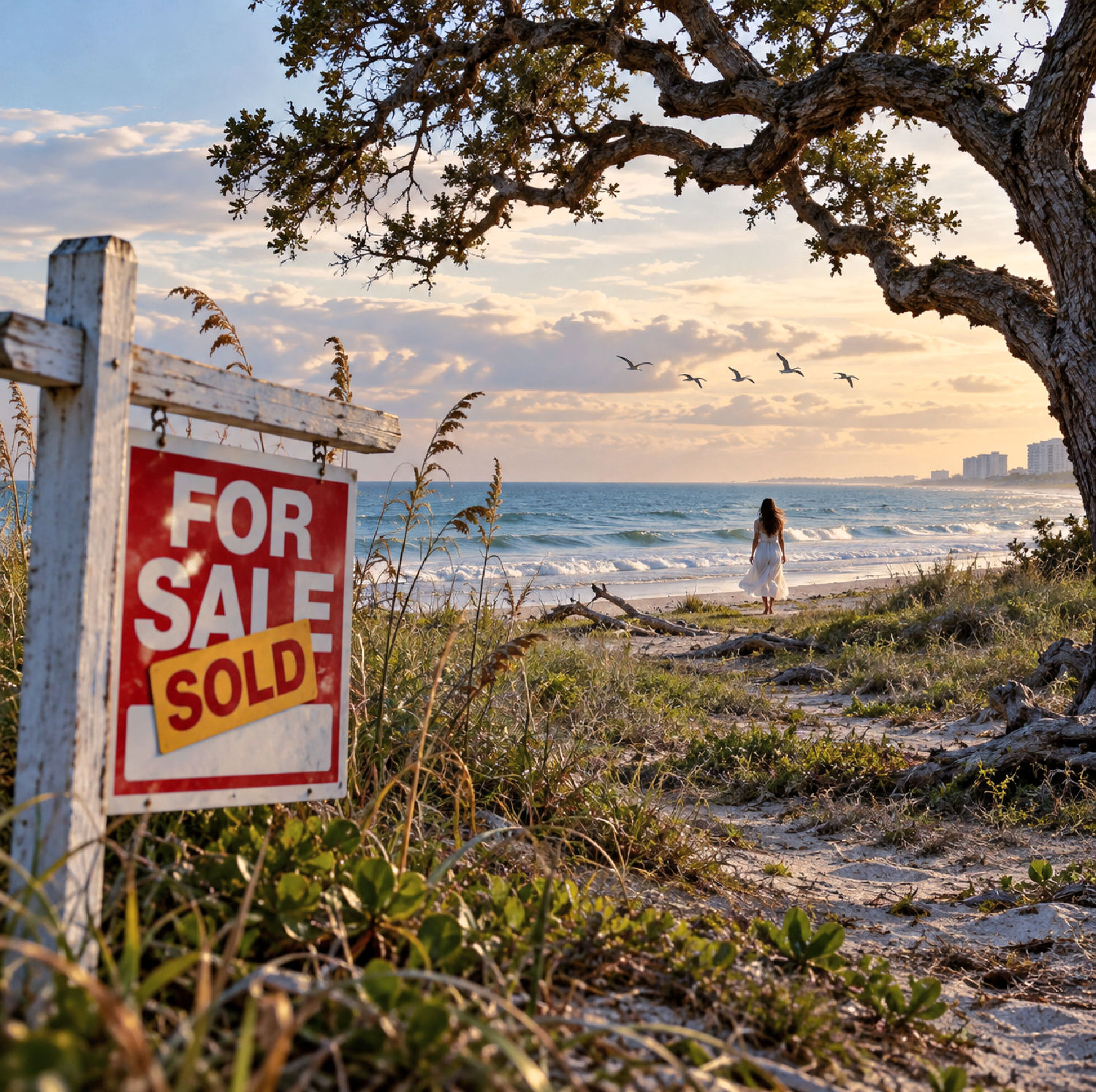
By 2019, Abraham Jr. has inherited the land—and a tax bill he can’t afford. A developer wants to put up condos. As the sale approaches, a woman named Marie arrives to camp on the property. She seems to know something about its past that Abraham doesn’t, and she has some unusual ideas about who might come to its rescue.
FAMILY TIDES
Three centuries, three interlocking stories, and plenty of trouble to go around. Author Nate House moves between them in short, vivid chapters, dropping us into scenes where something is already happening. Characters rarely get much time to settle into their good fortune before another complication arrives.
“If I start to get bored of a section, I’m imagining that the reader is going to get bored of it, too,” explains Nate, an East Falls neighbor (and Local contributor) who teaches English at Community College of Philadelphia.
His story has local roots, too—Abraham grows up around Bivalve, an old New Jersey oyster port on Delaware Bay. Nate describes the surrounding remoteness with a novelist’s eye for possibilities: “If you want to bury a body, that’s where I’d go.” His encounters with year-round Shore residents also helped him imagine the isolation of life here and how it might create a special connection to the environment.

The Florida setting grew out of a vacation find. Nate and his wife, Mary, discovered an affordable, dog-friendly rental on a rustic stretch of Hutchinson Island, between the Atlantic and the Indian River. During a 2019 teaching sabbatical, he returned to stay in a one-room cabin—the only building on roughly eleven acres, in the shadow of neighboring condos. Bobcats, raccoons, and gopher tortoises shared this pocket of wild Florida where he spent his mornings writing.
TANGLED UP IN TIME
His first version of House of Refuge focused on a present-day struggle to save unspoiled land from development. But as he revised, Nate realized the story actually began centuries earlier. That expanded history brings a rich and varied cast – human and otherwise — into a relatively short novel.
Generations of Marys and Maries form a maternal chain of custody for the stories of this place. An old live oak becomes a family landmark, bearing witness to lives that pass much more quickly than its own. The birds earn our attention, too, connecting Abraham’s early years on the Jersey bayshore with his later life in Florida.
The surf, marshes, and tidal waters have their own rhythms, whether the people nearby are falling in love or making a terrible mistake. The land becomes a living presence in its own right, with a past that inhabits it and a future no one can take for granted.
Nate’s lyrical writing is layered and occasionally wry. In one episode, the Ais pretend to have a contagious illness to scare off would-be settlers. Then a physician shows up. Instead of fleeing, he tries to cure them. They’re stuck playing along with someone whose good intentions are ruining a perfectly useful deception.

The humor, though, grows out of a desperate need to survive European colonization. The doctor’s kindness wins their trust, but the hope that his whiteness might protect the next generation ends in heartbreak. Violence and sorrow echo through all three narratives. And sometimes, those echoes seem almost literal.
VOICES CARRY
Characters pick up sounds and impressions that don’t quite belong to their own moment: voices, horses, the rattle of chains. The supernatural slips into the story quietly enough to leave us wondering what we’ve encountered. A memory? A warning? Someone who hasn’t quite left?
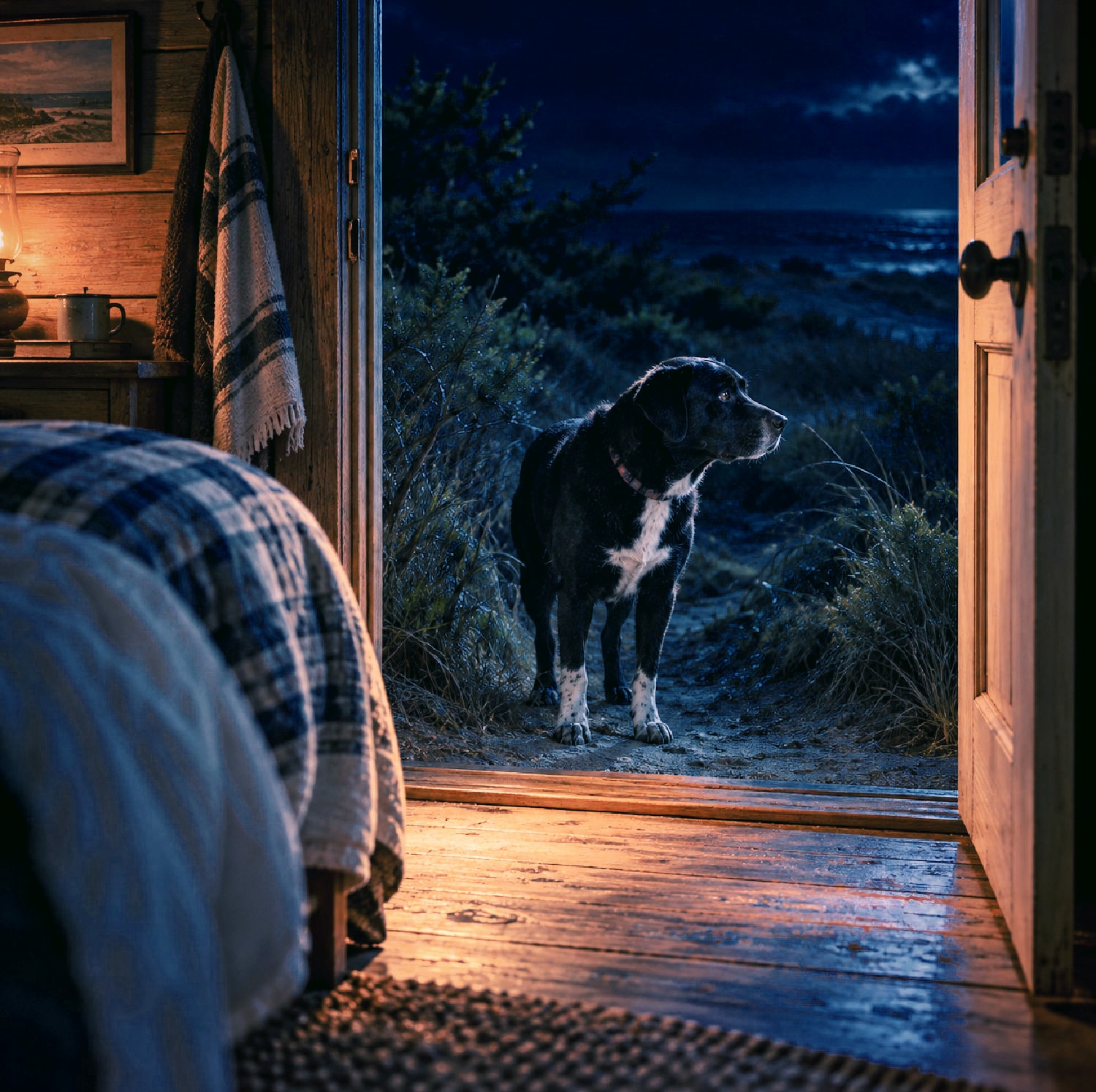
Nate felt something of that atmosphere at the cabin, where he slept with the door open. “It does feel ghosty there,” he says. Some nights, his elderly dog would run off toward the beach after noises in the darkness. Indeed on the Treasure Coast, with its long history of shipwrecks, fugitives, and piracy, a writer has plenty to keep him company when the sun goes down.
By the time Abraham faces losing the property, we’ve seen people find shelter, build families, and grieve losses on this special land. We know the wildlife, too—the creatures filling the water, earth, and sky. Turning the place into condos threatens a world we’ve come to know through Abraham and the generations before him.
But Nate complicates the easy version of that conflict. Abraham may be a good caretaker, but does loving and protecting a place make it his? Does inheriting it settle the matter? “It shouldn’t have belonged to him, either,” Nate says. “Nobody owns it. It’s land. It’s been here forever. It’ll be here after us.”
TO BE CONTINUED
People receive so much from this place: food, shelter, love, the chance to begin again. The land sustains the generous and the cruel alike, but what they do with that chance becomes the next generation’s inheritance. Mary leaves room in her journal for stories beyond her own; each life adds a few lines, often changing how we read the ones before it.
The novel’s closing turn offers the land a chance to remain a refuge, without guaranteeing a happy ending. After three centuries of people laying claim to this coast, for now the birds will have a say again.
House of Refuge follows Nate’s award-winning debut, Float, the story of a shipwreck survivor haunted by his lost wife and their troubled marriage. In his new novel, that same eerie mingling of love and loss reaches beyond one couple to embrace a whole patchwork of lives.
For history buffs, nature lovers, and anyone who enjoys a little mystery with their sea air, Nate offers a bracing drama with deep roots—and a few restless spirits. Whether you’re heading down the Shore or escaping into an armchair, this is a place worth getting lost in.
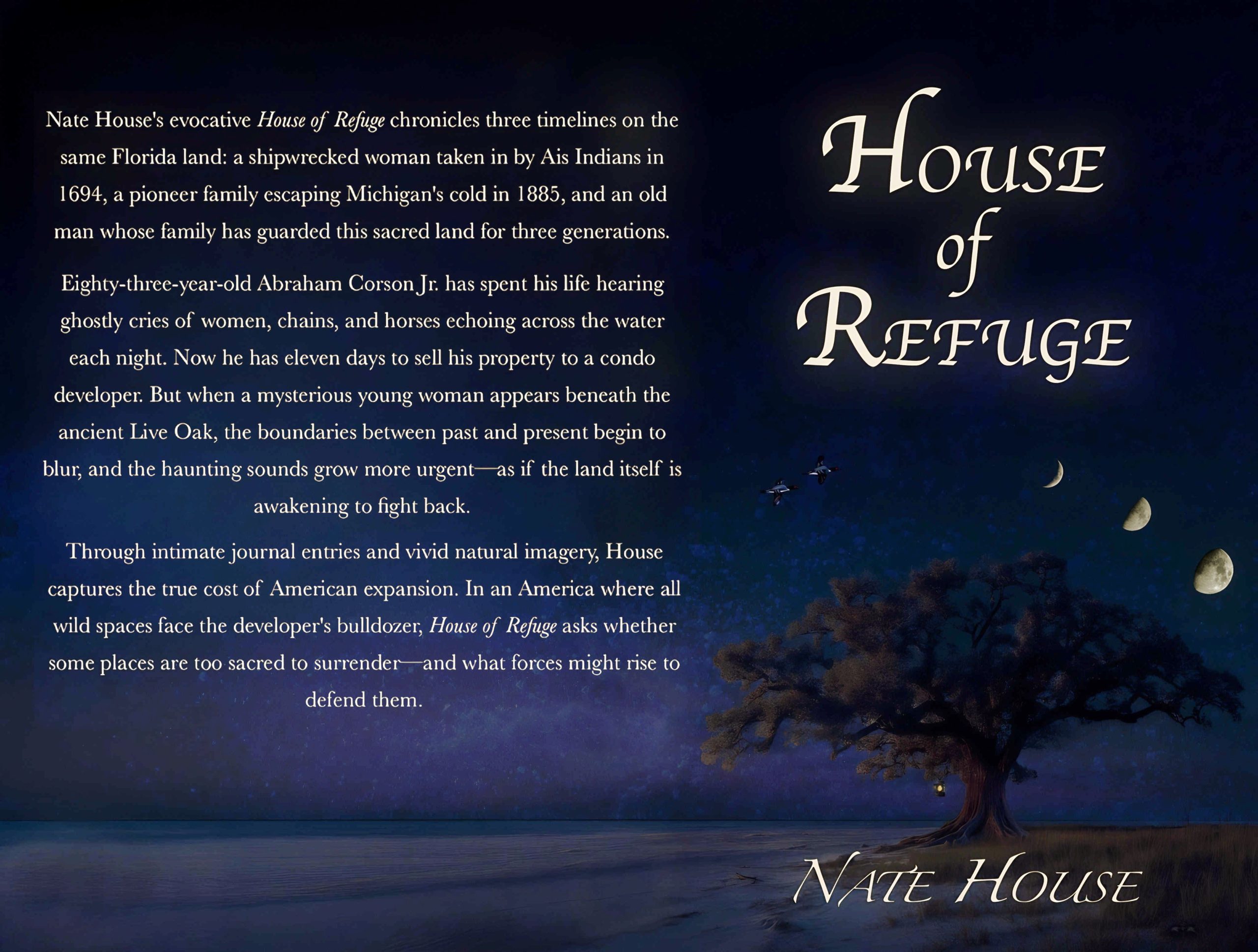
⭐⭐⭐⭐ House of Refuge, by Nate House (Silent Clamor Press; September 2026).
ℹ️ Find Nate at natehouse.wordpress.com, where he shares short stories, news, essays, and creative non-fiction.
MORE TO THE STORY
Nate’s fiction draws on real history and the natural world, providing curious readers plenty of intriguing tangents to explore. Here are three of our favorites.
Houses of Refuge:
Beginning in 1876, the U.S. Life-Saving Service established shelters along Florida’s sparsely populated Atlantic coast, providing food and lodging for shipwreck survivors who reached land but remained far from help. Keepers lived on-site with their families and searched the beaches after storms for anyone who had washed ashore. Only one of Florida’s houses of refuge still stands: Gilbert’s Bar, near Stuart, now preserved as a museum.
Treasure Coast:
This stretch of Florida’s Atlantic coast takes its name from a Spanish treasure fleet wrecked by a hurricane in 1715. Ships laden with gold, silver, and jewels sank along the coast, leaving riches that have drawn generations of treasure hunters and salvage crews. Storms have periodically washed coins and other artifacts onto the beaches. Local newspaper coverage of these discoveries helped establish the “Treasure Coast” nickname.
U-Boats off Our Shores:
German submarines weren’t merely spying along America’s coastline as many of us had been taught in school. “Operation Drumbeat” brought a devastating campaign against merchant shipping to North American waters after the US joined WWII. Attacks here sunk more than 450 ships and took over 6,800 lives. US coastal defenses were so inadequate that German crews called these months “American Shooting Season.” Passenger ferries weren’t safe, either: in October 1942, a U-boat sank the Caribou between Nova Scotia and Newfoundland, killing 137 people, including children.
What do you think? Click the links for more info, and please leave your questions and comments below. Or email editors@nwlocalpaper.com — we love to hear from readers!
Be the first to comment