


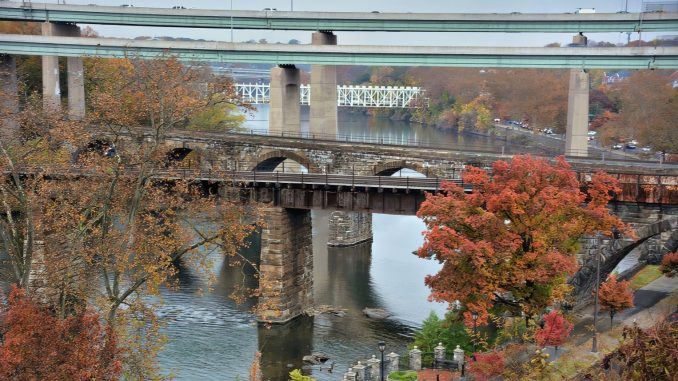

A poet’s meditation on the five bridges of East Falls
With all our leafy residential streets, it’s easy to forget that East Falls at its heart is a river town, with a long history shaped by catfish runs and coal smoke, by icy spring floods and the hum of waterside industry.
The bridges are part of that story. Five of them cross the Schuylkill in just a mile or so of riverfront. We pass over and beneath them, admire them in every season. Have you ever tried listening to them?
Each structure, from the oldest railroad crossing to the towering Twin Bridges, has its own peculiar music. The following four poems by g. emil reutter tune in to each span’s special shapes, sounds, textures, and rhythms.
We’ve paired his poems with photographs from our archives and a little history of the bridges themselves. Together, they offer another way to see — and hear — a familiar stretch of the neighborhood.
STONE, STEEL, AND STANZAS
Poems by g emil reutter
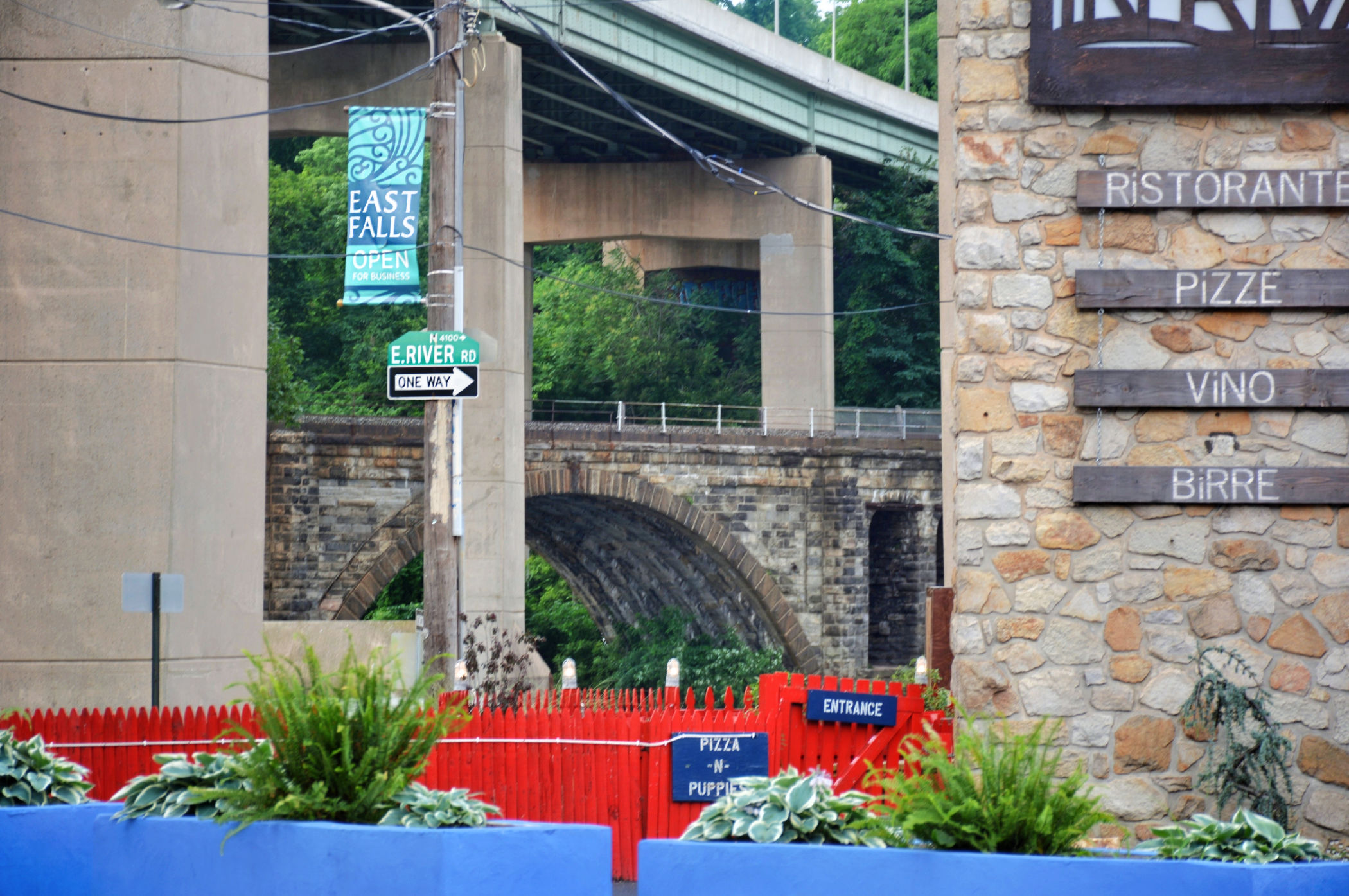
Inspired after a walk along Kelly Drive after dinner at In Riva
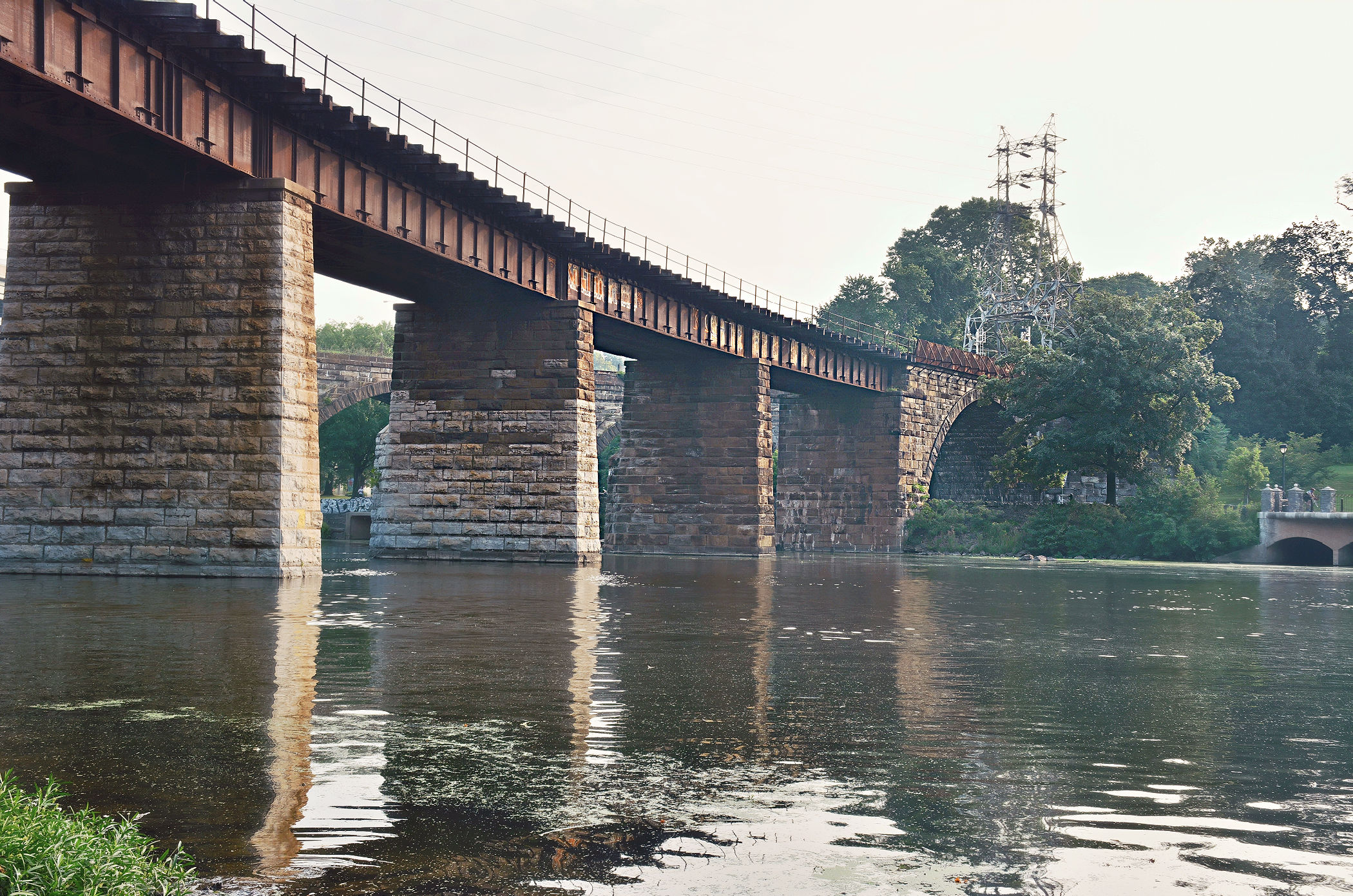
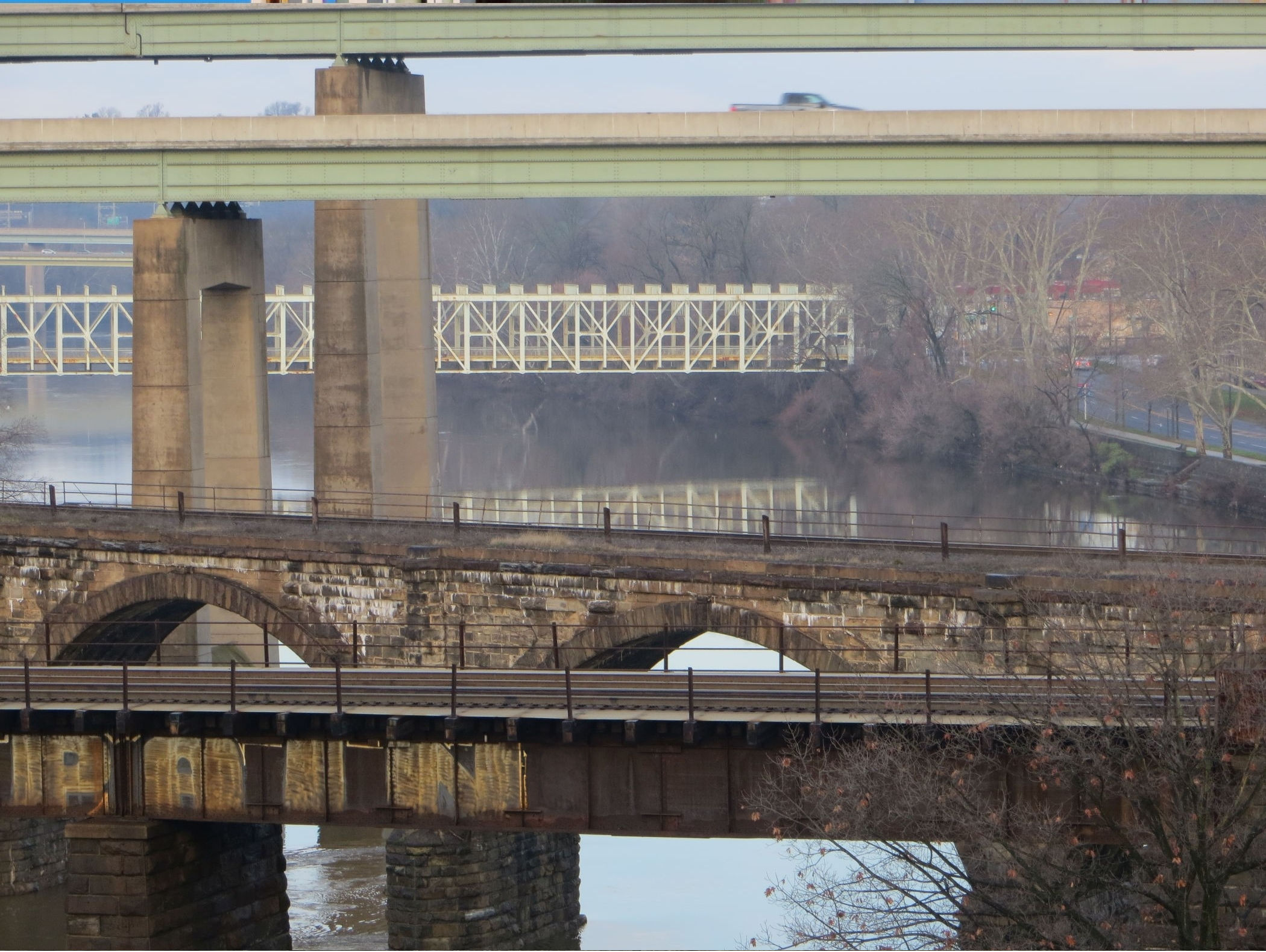
The Philadelphia and Reading Railroad Bridge
It could be the first or the last
Humbler than the others
Just one stone arch above
Kelly Drive then curving
across the Schuylkill in plain
rusted eight plate-girder
spans carrying
Freight
            Silver Liners
                              Bombardier trains
Along the quiet of the river passing
Underneath one can hear the
Whistles of the commuter trains
        Blast of freight train horns
          Echoes
             Echoes
Throughout East Falls
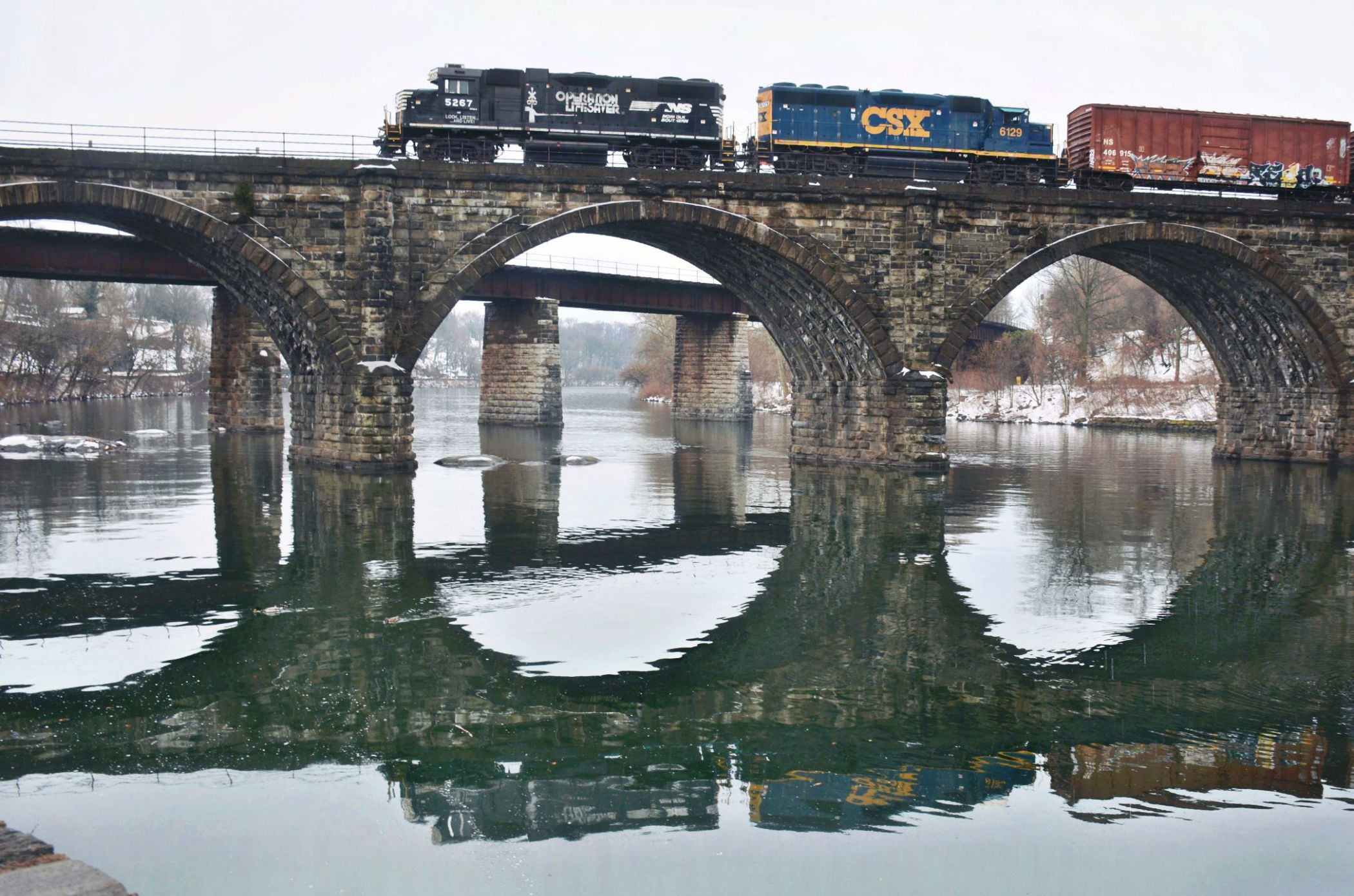
Reading Richmond Railroad Bridge
Half-moon arches of Richmond Bridge
Reflected in ripples of Schuylkill River
Freight train rumbles and lurches along
Linear rails atop ribbed skew arches of
Granite and schist. River flows straight
Line against oblique direction of each
Of the six arches as it sings in the echo
Chambers of each arch, of the sloshing
And roaring river.
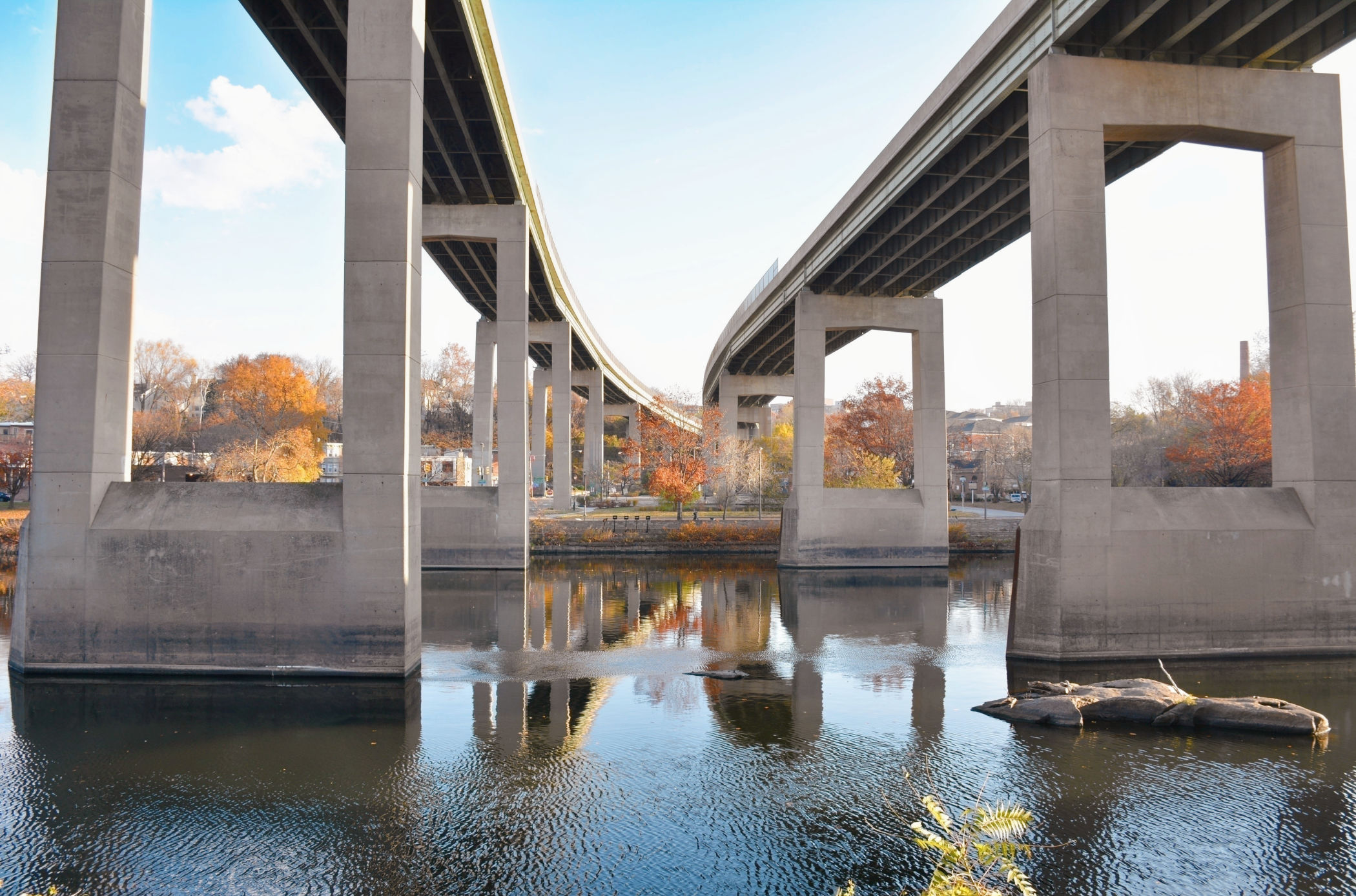
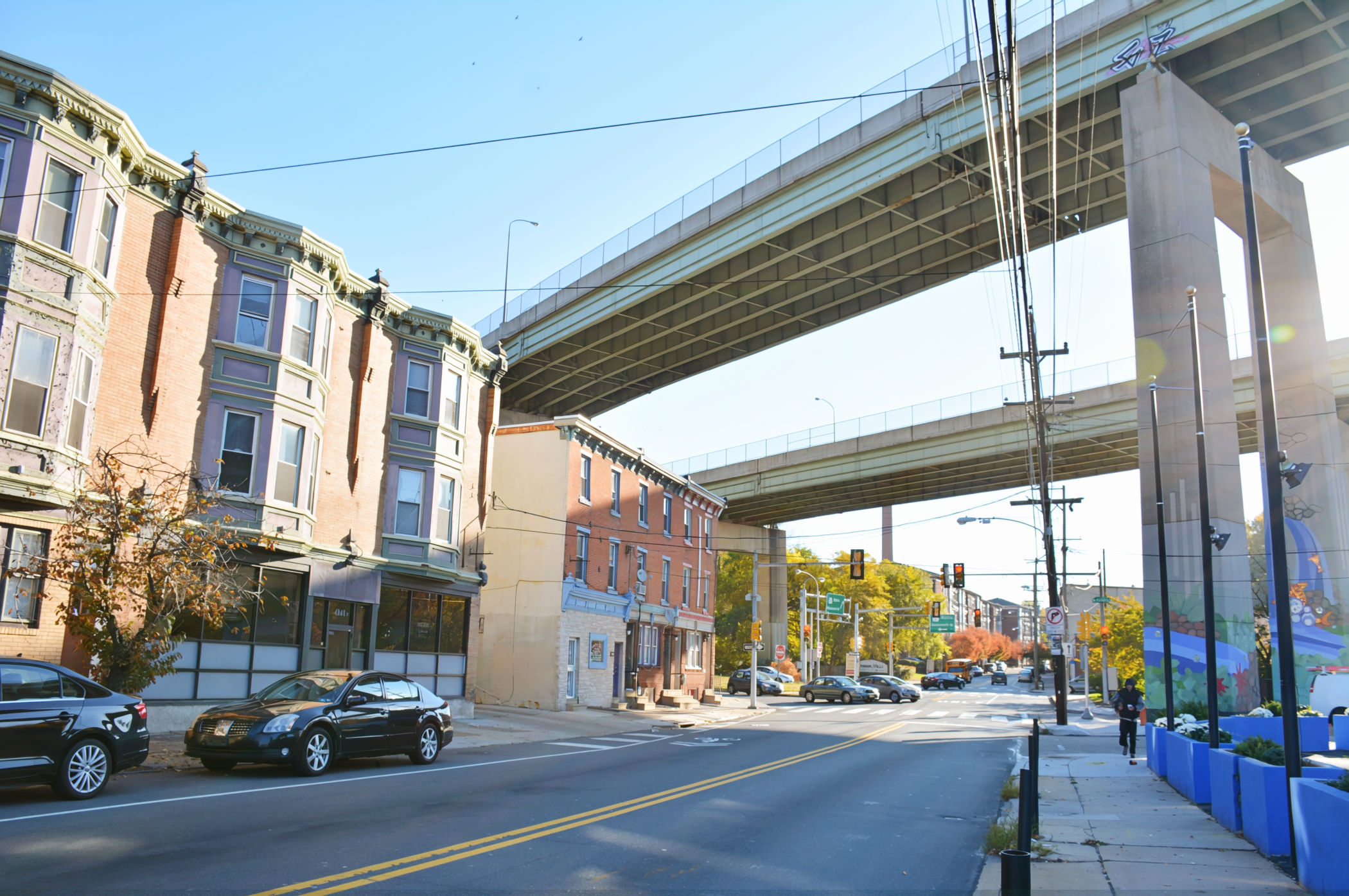
Twin Bridges
They rise from
             Rivers channel
Vertically as towers into the sky
             Cold reinforced concrete
With land-based abutments in the
             Valley of the Schuylkill
Above
          Above
                   Above
Railroads
Drives
Avenue
River
Supporting multi-span superstructure
           One highway yet two bridges
Eleven spans of steel girders north
            Twelve spans south
Resting on concrete piers buffered
            By bridge bearings
Turbulent Schuylkill passes underneath
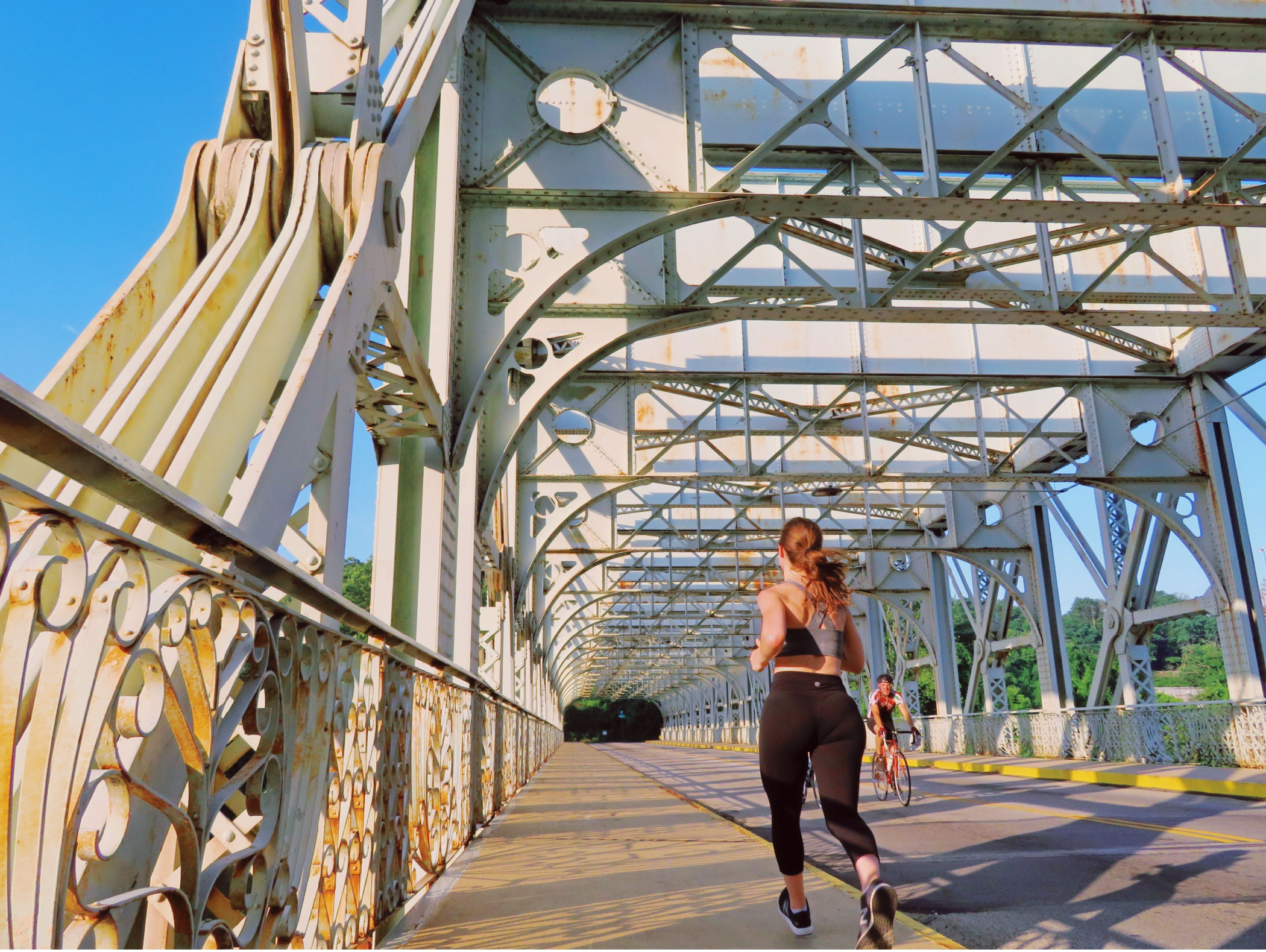
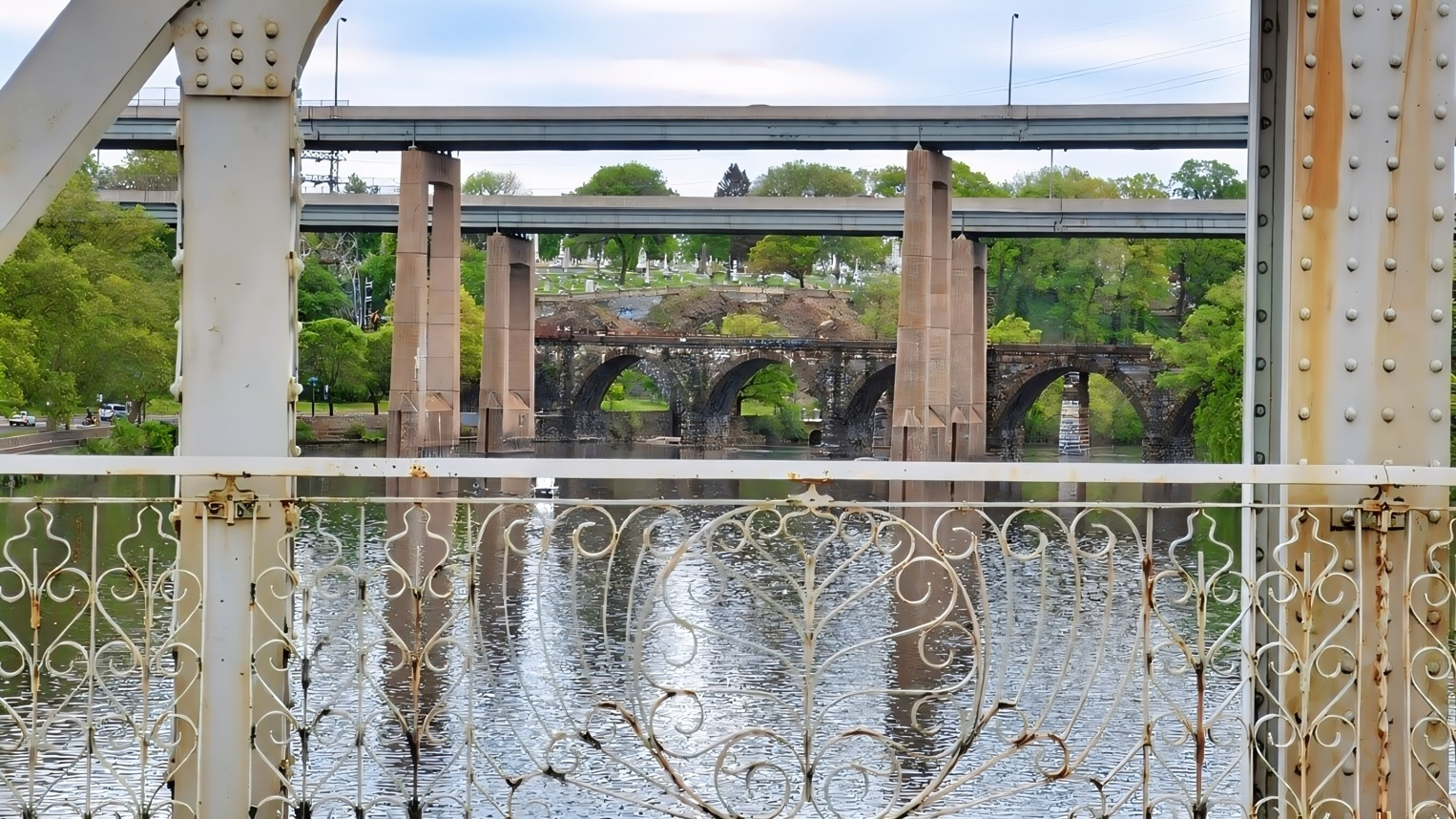
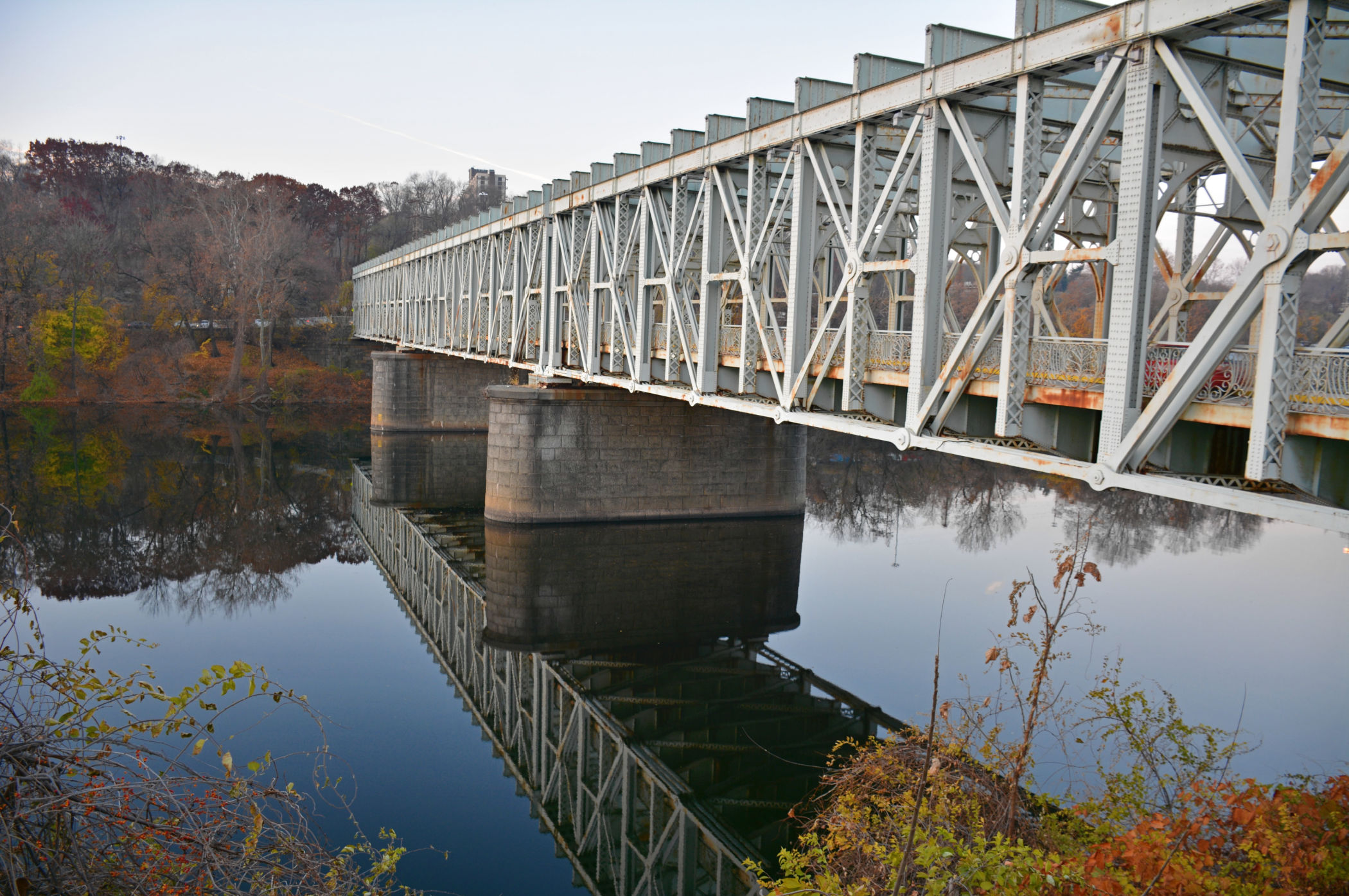
Falls Bridge
Tree of life branches across river
              Amongst ribbons bolted to flat pieces
People, bikes and cars pass along deck
Of bridge
               Of steel struts, of triangles
                         Of rectangles, of circles
Of squares, of x’s along
                         Beams of undotted I’s
And frozen pinwheels above
                 The Schuylkill singing underneath
                          In echoes of rushing roar
                                 Yet on the abutment
Nearest the bank a rhythmic gurgling and sloshing
                                  A drumbeat of life.
SUSPENDED IN TIME
There’s an old saying that you can never step into the same river twice. The water has moved on, and so have you.
Bridges, though, are anchors in a neighborhood that never stands still. For generations, they’ve held their ground as trains and traffic pass overhead and reckless currents rush below. Each one is a thing of beauty and function. As feats of engineering, they show what understanding and ingenuity can accomplish, even across daunting divides.
About the Poet
g emil reutter is a Philadelphia poet, fiction writer and editor who spent 26 years with the Amtrak Railroad Police, working in patrol, anti-crime and criminal investigations before retiring. Born in Bristol and raised in Levittown, he’s spent most of his life in Philadelphia, writing and publishing 22 collections of poetry and prose. He previously published The Fox Chase Review (2008–2015) and is a contributing editor at the online literary journal North of Oxford. His books include Poems of the Pennypack, Blue Collar Poet and Glint: Down the Shore Poems. Find more of his writing, books and literary news at gereutter.wordpress.com.
BEHIND THE BRIDGES
East Falls’ bridges represent more than a century of construction, changing transportation, and neighborhood history. Each has a story beyond the river it crosses.
Philadelphia & Reading Railroad Bridge (1890)
A meeting of stone and iron, this railroad bridge begins with an 80-foot stone arch over Kelly Drive before curving across the Schuylkill on eight wrought-iron plate-girder spans. Built in 1890, it joined an older Reading Railroad crossing to form a Y-shaped rail connection, making it easier to move trains toward downtown Philadelphia. Remarkably, the bridge still retains its original iron girders.
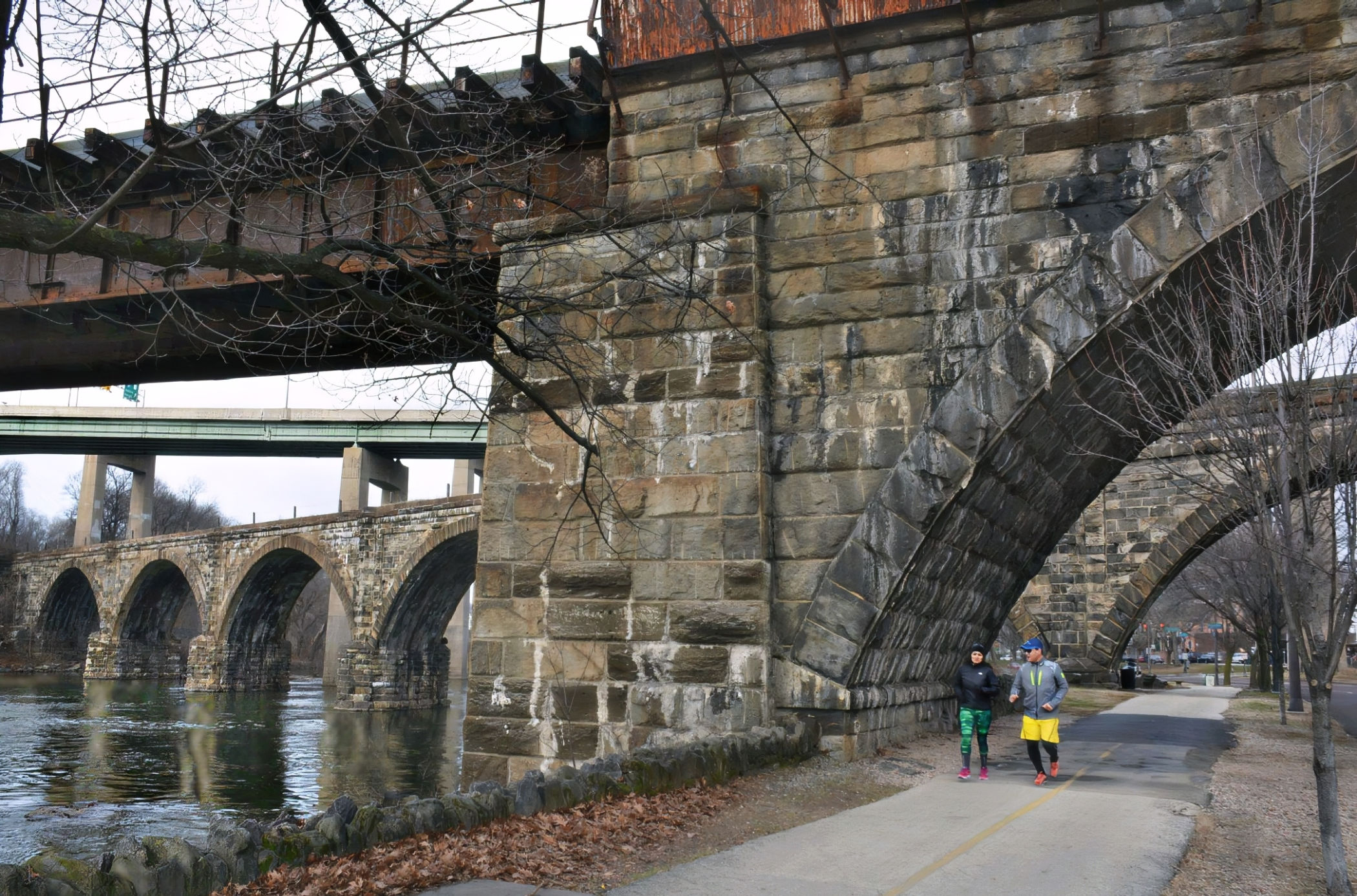
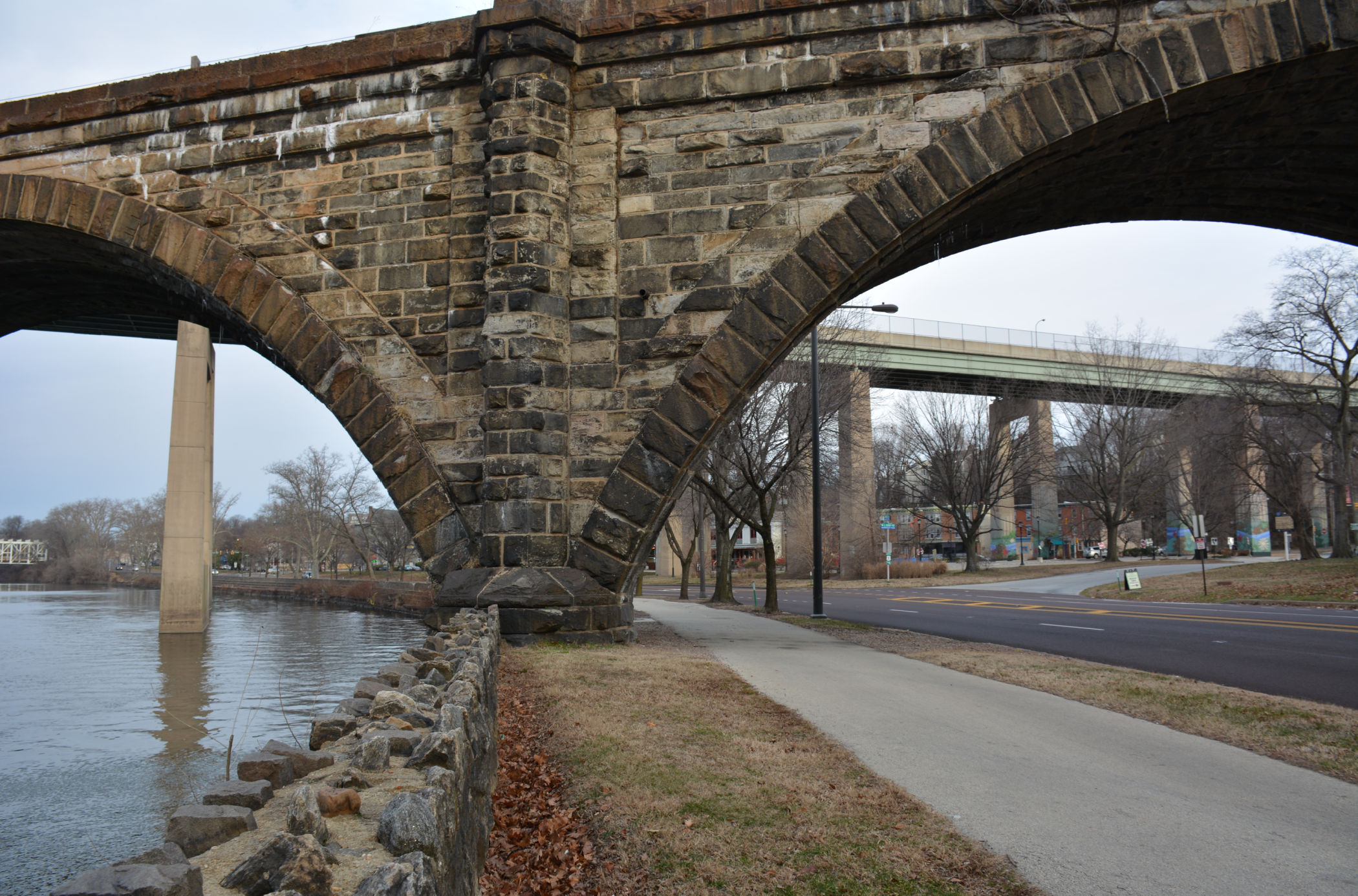
The Schuylkill River Viaduct aka Reading Richmond Railroad Bridge (1853–1856)
Those graceful stone arches conceal a remarkable engineering challenge. Because the railroad crossed the river at an angle, its arches had to be built in offset sections. The project proved so complicated that the Reading Railroad used its own workers to construct it, using an earlier wooden bridge for support while trains continued running. The railroad helped connect East Falls industries with the larger rail network and the busy coal docks at Port Richmond (thus its nickname).
Twin Bridges (1960)
Rising more than 100 feet above the Schuylkill, these parallel spans carry Roosevelt Expressway traffic over the river, railroad tracks, and streets below. Opened in 1960, they brought faster travel through Philadelphia, but also changed the landscape of East Falls. Construction of the expressway cut through the neighborhood, even claiming part of the former Dobson Mills baseball field. Today, their towering concrete supports are among the neighborhood’s most recognizable features.
Falls Bridge (1895)
With its elaborate steelwork and distinctive geometric patterns, the Falls Bridge is perhaps East Falls’ most recognizable historic landmark. But its massive construction conceals an unfinished ambition. City engineer George S. Webster designed the bridge to support two levels, including an upper roadway and streetcar line connecting higher ground on either side of the river. That second deck was never built. Its exceptionally heavy framework was also designed to withstand the forces that had destroyed earlier bridges at the Falls.
What do you think? Which bridge is your favorite? Got a story or memory to share? Leave your comments and questions below. Click the links for more pics and info.
Be the first to comment