


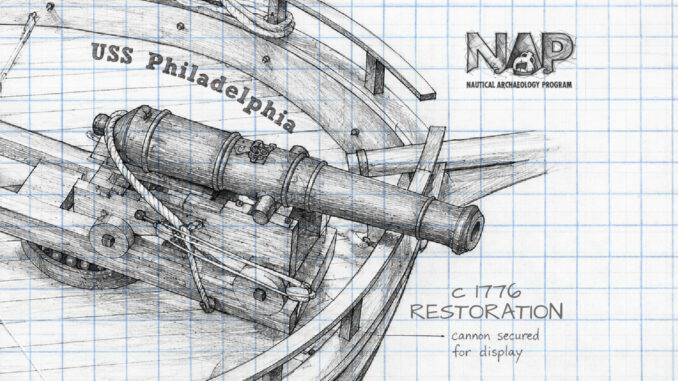

Aggies to the rescue for a gunboat named Philadelphia.
You’d probably be surprised if I told you Texas was doing Philadelphia a favor, wouldn’t you? And I don’t mean the Cowboys just handed a few April 2026 draft selections to the Eagles. Nautical archaeologists at Texas A&M University are stepping up to preserve a piece of American history in our name.
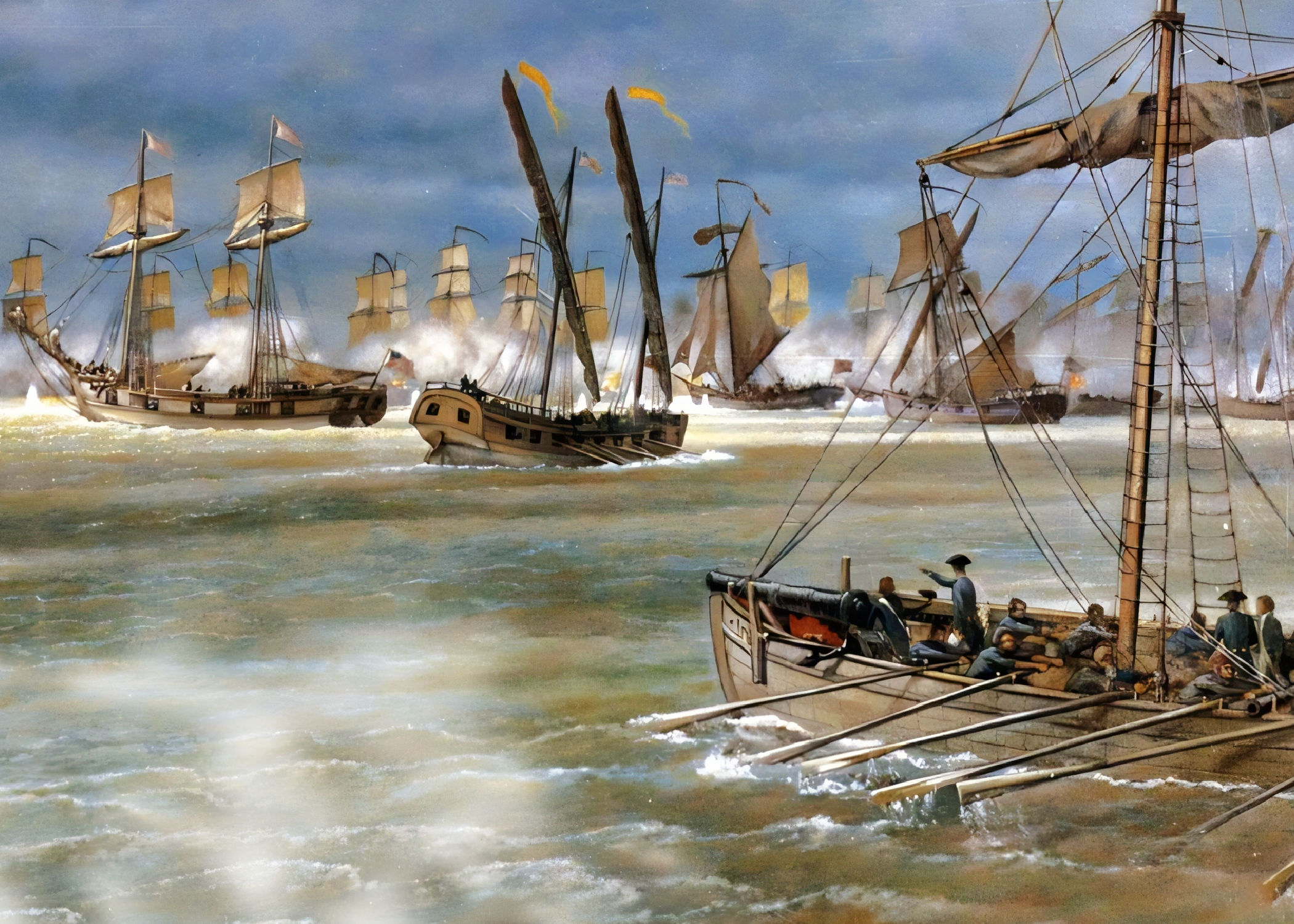
The USS Philadelphia sank in a brutal Revolutionary War battle against the British Navy in October 1776, just months after the Declaration of Independence was signed. Congress had only recently voted to create a Continental Navy, and on Lake Champlain — a key waterway between Canada and the colonies — Americans were still piecing together a fighting fleet.
The mighty British Navy had other ideas.
At the time, Great Britain was the greatest maritime power in the world, and its forces arrived on Lake Champlain with gunboats, grand warships, and royal swagger. At Valcour Bay, the fighting began before noon and dragged through the day in a long and bloody slugfest. By sunset, the British were so sure of victory that they left some battered American ships still floating, assuming they’d finish the job in the morning.
CUT AND RUN
Not so fast. In true Philadelphia fashion, if we were going to lose, we were not going easy. Benedict Arnold, who had been a ship captain before the war, sneaked what remained of the American fleet through a narrow channel under cover of darkness. The British gave chase, and over the next two days, they finished off mostly every vessel.
The USS Philadelphia did not make it that far. She took a fatal hit on the first day, and sunk to bottom of the bay. For more than 150 years, she stayed there.
In 1935, a World War I veteran and amateur military historian named Lorenzo Hagglund found her resting upright where she went down, astonishingly well-preserved after more than a century and a half below the surface. He raised the craft later that year, along with the cannonball that sank her.
For years, the old gunboat was displayed in a barn in Upstate New York. Then, in 1961, she was donated to the Smithsonian Institution, where she became one of the National Museum of American History’s great Revolutionary War treasures.
BATTLE STATIONS
Authorized by the Continental Congress and built in Skenesborough, New York (now known as Whitehall), the Philadelphia was a “gundalow” — a low, flat-bottomed gunboat built for inland waterways. Over 50 feet long, with a mast almost four stories high, she was basically a floating, armed platform for her crew of 44 men.
The Philadelphia carried three main cannons: a 12-pounder faced forward, with two 9-pounders on either side, plus mounts for eight swivel guns. Spare and functional, she ferried American firepower where needed with only makeshift cover from enemy attack.
That is part of what makes her survival so remarkable. The Philadelphia was one of the first ships of the United States Navy, and today she is recognized as the oldest American fighting vessel still intact.
But the Philadelphia is more than old wood and iron. When she was raised, she brought up hundreds of other relics with her: buttons, gunflints, cooking tools, and even human remains. The clash had not simply sunk her; it had sealed a piece of 1776 in place.
LONE STAR ON DECK
Nearly 250 years later, that time capsule is fragile. The old timbers are shrinking. Iron fittings are deteriorating. So the work now falls to conservators, not commanders: careful hands charged with keeping one of the Revolution’s few surviving war-torn witnesses intact for the people who come next.
Now Texas A&M hopes to preserve her in time for America’s big birthday. It’s a fitting tribute from a state that won its independence from Mexico to the country that won its independence from Great Britain — and to the city where that freedom was declared.
And to the ship that still carries its name. Fair winds, USS Philadelphia.
ISN’T SHE LOVELY
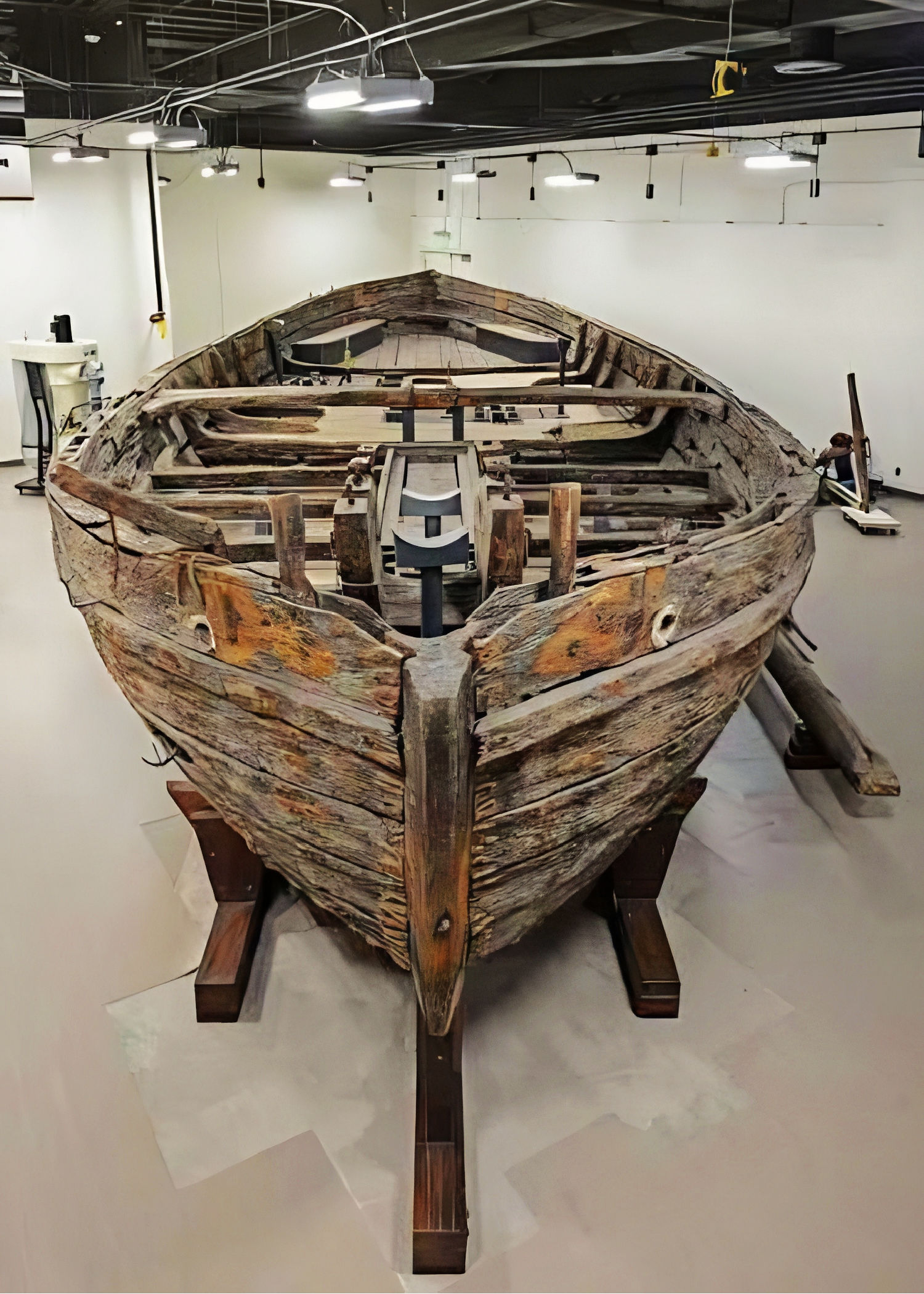
A gundalow (often spelled “gondola” in 18th‑century sources) was a flat‑bottomed, shallow‑draft gunboat built for the tight, tricky waters of lakes and rivers. An inland bruiser: low to the water, wide for stability, and sturdy enough to carry a surprising amount of firepower. Because it drew so little water, a gundalow could slip over shoals, hug shorelines, and maneuver where deeper‑keeled ships simply couldn’t go. They weren’t graceful. They weren’t fast. But in the right place — a bottleneck, a river bend, a shallow lake — a gundalow could turn geography into a weapon.
The gunboat Philadelphia is housed at the Smithsonian’s National Museum of American History in Washington, D.C. Her original gallery is temporarily closed during conservation, but visitors can follow the multiyear preservation project through special viewing windows and displays. From Philly, it’s a very doable day trip: about two hours by Amtrak, which offers regular runs from 30th Street Station to the foot of the U.S. Capitol, practically. You’ll see it ahead of you when you exit Washington Union Station, where it’s just a quick hop by Metro to the museum (via either Federal Triangle or Smithsonian stations).
For armchair explorers, the Smithsonian’s Gunboat Philadelphia page opens a few hatches of its own: a high-resolution 3D digitization that readers can zoom, rotate, and explore online, plus project updates with great photos from the preservation work.
Smithsonian National Museum of American History
1300 Constitution Ave. NW
Washington, DC 20560
Website: americanhistory.si.edu
Admission: Free; no tickets required
Closest Metro: Federal Triangle or Smithsonian stations on the Blue, Orange, and Silver lines.
Amtrak from Philadelphia
Depart: William H. Gray III 30th Street Station
Arrive: Washington Union Station
Route: Northeast Regional or Acela
Website: amtrak.com
Tip: Check fares early and compare departure times; Amtrak’s lowest fares are usually limited and can change quickly.
Thoughts? Questions? My friends, I love your feedback! Please click the links for more information, and reach out in the comments below. If you enjoyed this history, please see my previous piece on the World Cup Fan Fest’s storied site in the heart of Fairmount Park.
View this post on Instagram
Be the first to comment