


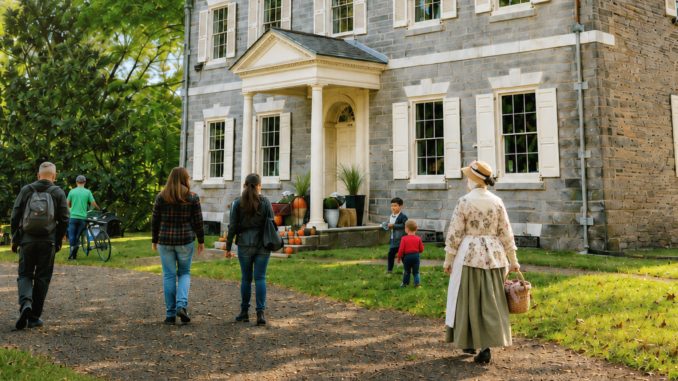

A historic handoff at Germantown’s Upsala Mansion.
While most kids my age were heading to Disney World with their parents, I was eight years old and visiting Cliveden with my father.
Each trip to the annual Battle of Germantown reenactment became a walk through Philadelphia’s Revolutionary history. Even after the staged fighting ended, my mind stayed with the damage still visible on Benjamin Chew’s country house from that foggy October morning in 1777, when Washington’s Continental Army tried to retake Philadelphia from the British.
Then we crossed Germantown Avenue, when Dad’s attention went to the Continental artillery. Mine went to the stately Federal mansion across the street: Upsala. The house became one of the local places that fed my fascination with history. Now, all these years later, it is entering another chapter.
Upsala came on the market this summer for close to $1 million and soon went under contract. The buyer stands to acquire nine bedrooms, 2.47 acres—and a house rule no ordinary home inspection prepares you for: History has dibs on the front lawn.
Past Lives
When you buy a house on a battlefield, it evidently comes with visiting rights. Under Upsala’s preservation agreement, every owner must allow Cliveden to use the grounds for Germantown’s annual Revolutionary commemoration. While the festival has evolved over the years, the provision still comes with the property.
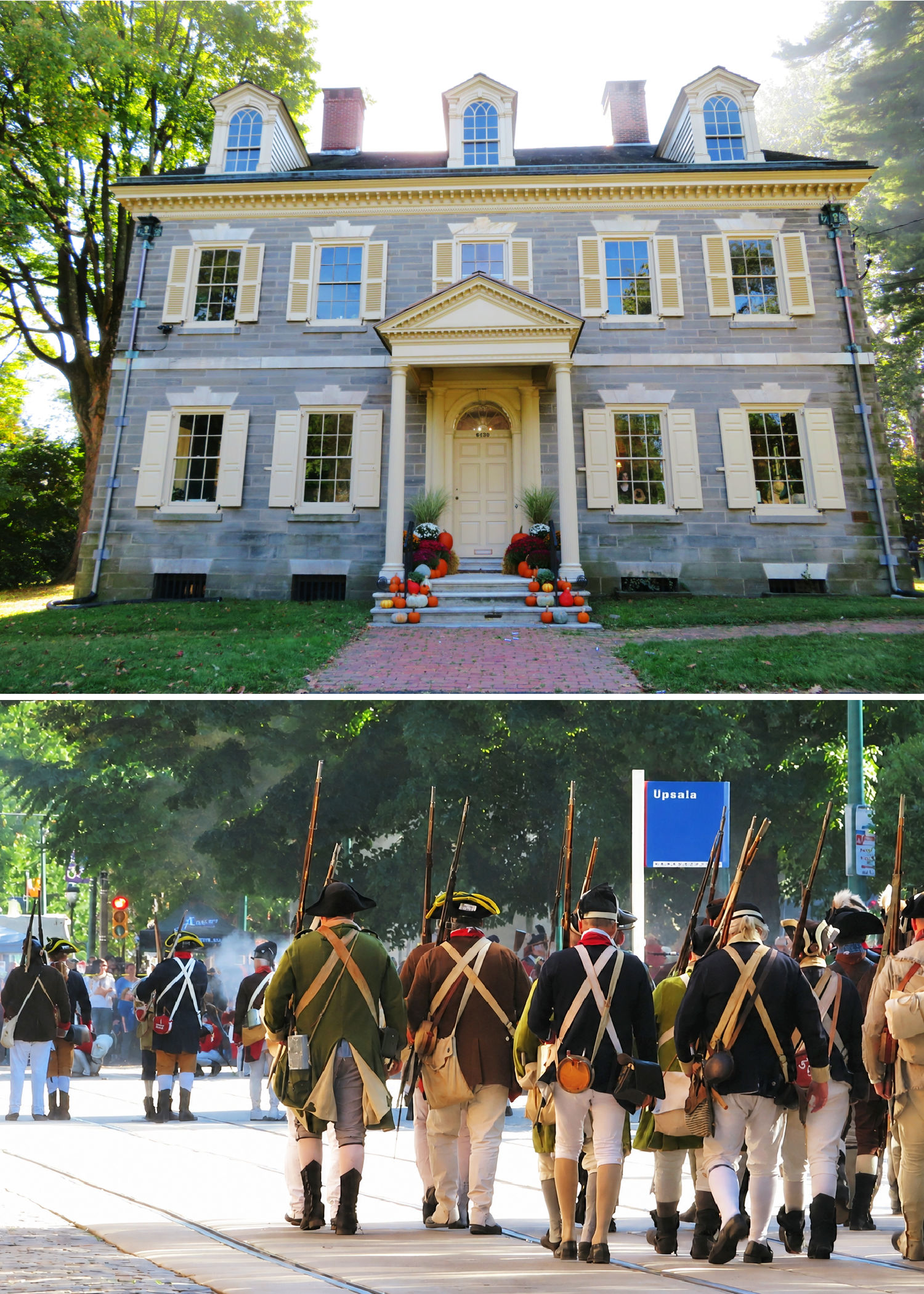
The Upsala we see today, however, had not yet been built when the battle erupted on October 4, 1777. A smaller house stood here, where Continental troops used the grounds as a staging point, firing across Germantown Avenue toward British forces occupying Cliveden during Washington’s attempt to recapture Philadelphia.
The present mansion followed in 1798, built for John Johnson III on family land. The Johnson name would become central to another chapter of Germantown history at nearby Johnson House, where later generations of Quaker abolitionists helped freedom seekers along the Underground Railroad.
John III and his wife Sally Wheeler raised nine children at Upsala, which remained in the family into the early 1940s, then vacancy and vandalism brought the house to the brink of demolition. Local preservationists led by Frances Anne Wister stepped in, restoring the mansion and opening it as a historic house museum.
The doors remained open until 2005, when dwindling attendance forced them shut. For years afterward, the National Trust for Historic Preservation and Cliveden searched for a future for Upsala.
The answer returned the house to its original purpose: make it a home again.
Room for Action
Alex Aberle and Violette Levy first saw Upsala in late 2016. They had experience rehabbing historic buildings, including South Philadelphia rowhouses. Their previous home measured about 300 square feet; Upsala had nine bedrooms. An audacious undertaking, no matter how much you love 18th century architecture. But they were besotted.
The couple outbid 8 other buyers and paid $550,000 in cash — $51,000 above the asking price. They moved in the day after closing and got straight to work making the exhibition and office spaces livable. They deep-cleaned and painted, updated aging systems and documented the restoration as they went.
Over the many years of renovations, their front lawn continued its contractual role in Germantown’s annual Revolutionary action. Aberle and Levy made the most of their ringside seat by hosting viewing parties inside the mansion. From Upsala’s windows, guests could take in the whole scene: Cliveden directly across Germantown Avenue, its stone walls still scarred by rebel fire, and the broad lawn below alive with time-honored drama.
Boom after boom bounced between the old stone houses. Muskets cracked, cannon roared and smoke swallowed parts of Germantown Avenue as soldiers charged, scattered and hit the dirt in theatrical death throes.
Crowds followed the skirmishes on foot while a loudspeaker called the action from one clash to the next. The spectacle was thrilling, but the volleys and cannon blasts felt increasingly uneasy in a community living with real gun violence.
Here, There, Everywhere
The full tactical reenactments I remember were paused in 2020. Revolutionary Germantown has since opened the story wider, bringing re-enactors and first-person interpreters together with tours, hands-on activities and stories from beyond the battlefield.

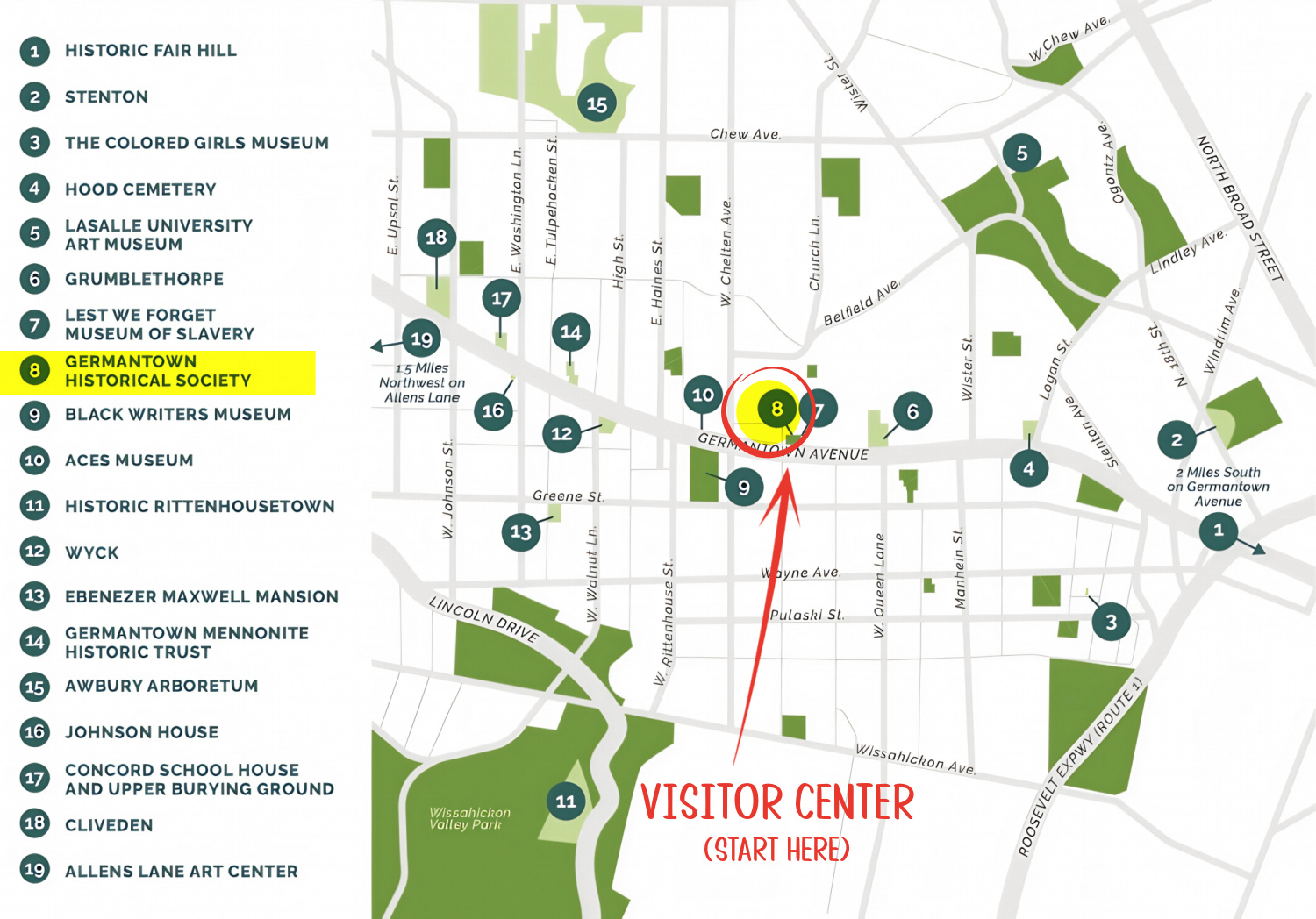
That broader lens fits Germantown’s layered history, from Revolution to abolition, from industry to the Arts, from botany to beekeeping, and more. The Battle is but one gripping chapter in a neighborhood with centuries of them. Historic Germantown connects 20 sites across Northwest Philadelphia, with tours, exhibitions, and special events for literally everyone.
You can follow a formal program or simply look up from the sidewalk. History lives here in gardens, meetinghouses, burial grounds, storefronts, and civic spaces – many in continuous use through today. Indeed, Upsala has been a family home, a museum, a preservation rescue and a family home again.
Now another household will find their own place in that long legacy.
Many Happy Returns
Upsala’s new owners will inherit a singular Philadelphia landmark and a role in one of the city’s largest history festivals, a free community tradition almost 50 years old. The bargain makes them guardians of the architecture and occasional hosts to the neighborhood.

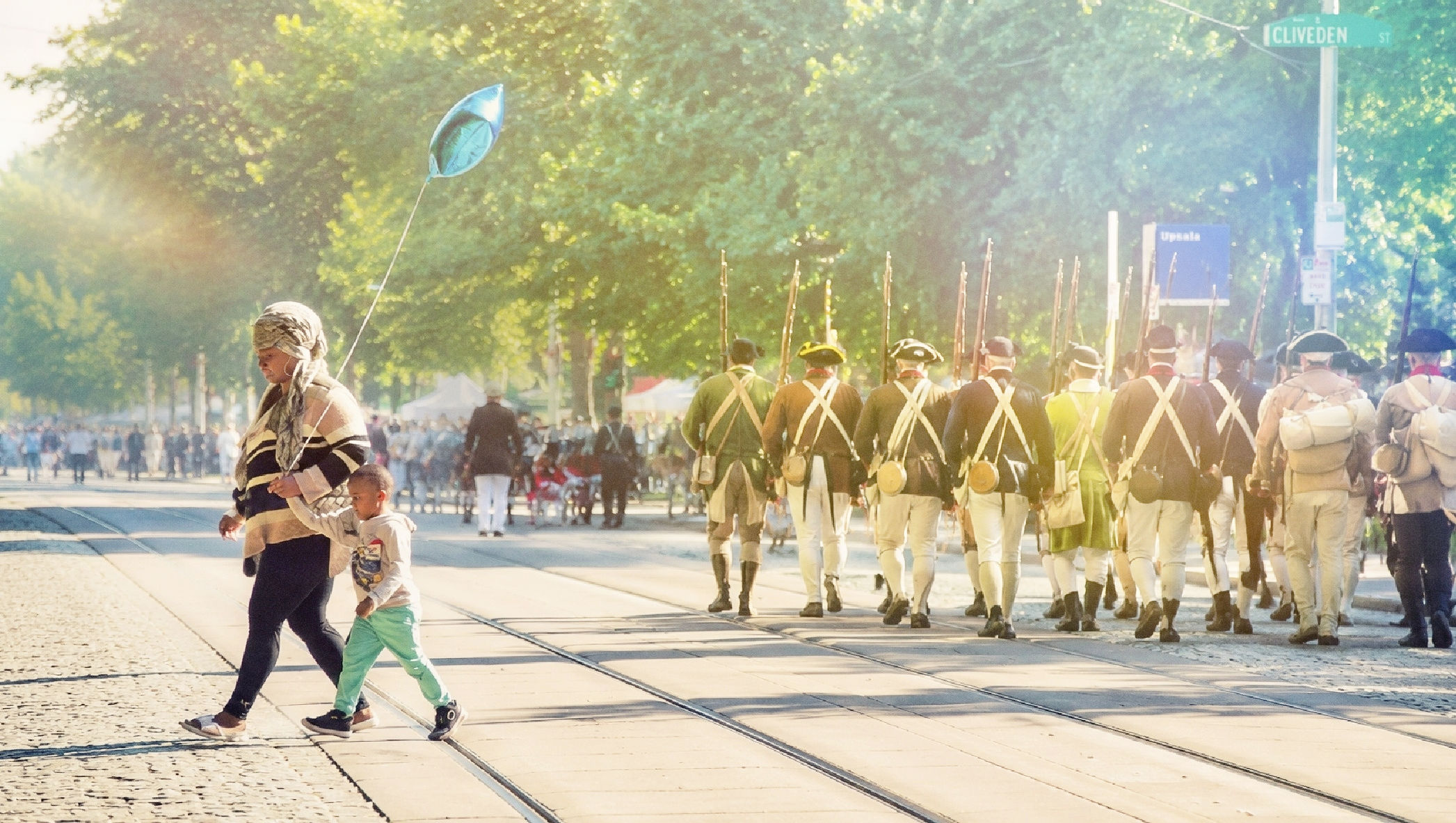
For a military-history fan like me, the added responsibility only sweetens the deal. Imagine! A thousand new friends, many dressed to take the field in 1777. The gunfire may be quieter now, but for a few hours redcoats, Continental soldiers, first-person interpreters and present-day neighbors all celebrate the past in their own way, together, on Germantown Ave.
I was eight when Upsala first caught my eye. The house and the festival have both changed since then – and so have I, obviously. Yet here I am decades later, still captivated.
This October, another crowd will fill those streets. Some will come for the war stories, some for the houses, and one child may look across Germantown Avenue and see something they never forget. Congratulations to the new owners. Welcome home! We’ll see you on the lawn.
More info on upsalamansion.com and @historicupsala on IG. History fans, head on over to Historic Germantown where you’ll find events, archives, photos, and other ways to stay inspired by the past.

A City Tradition: The Revolutionary Germantown Festival
Saturday, October 3, 2026
10 a.m.–4 p.m. • Rain or shine
Cliveden, 6401 Germantown Avenue
Free and open to all
Cliveden and the sites of Historic Germantown mark the 249th anniversary of the Battle of Germantown with re-enactors, first-person interpreters, tours, family-friendly activities and more. The full schedule is still taking shape. Check Cliveden’s Revolutionary Germantown Festival page for updates.
Thoughts? Questions? My friends, I love your feedback! Please click the links for more information, and reach out in the comments below. If you enjoyed this history, please see my previous piece on the restoration of the USS Philadelphia, a Revolutionary War-era gunboat.
Be the first to comment